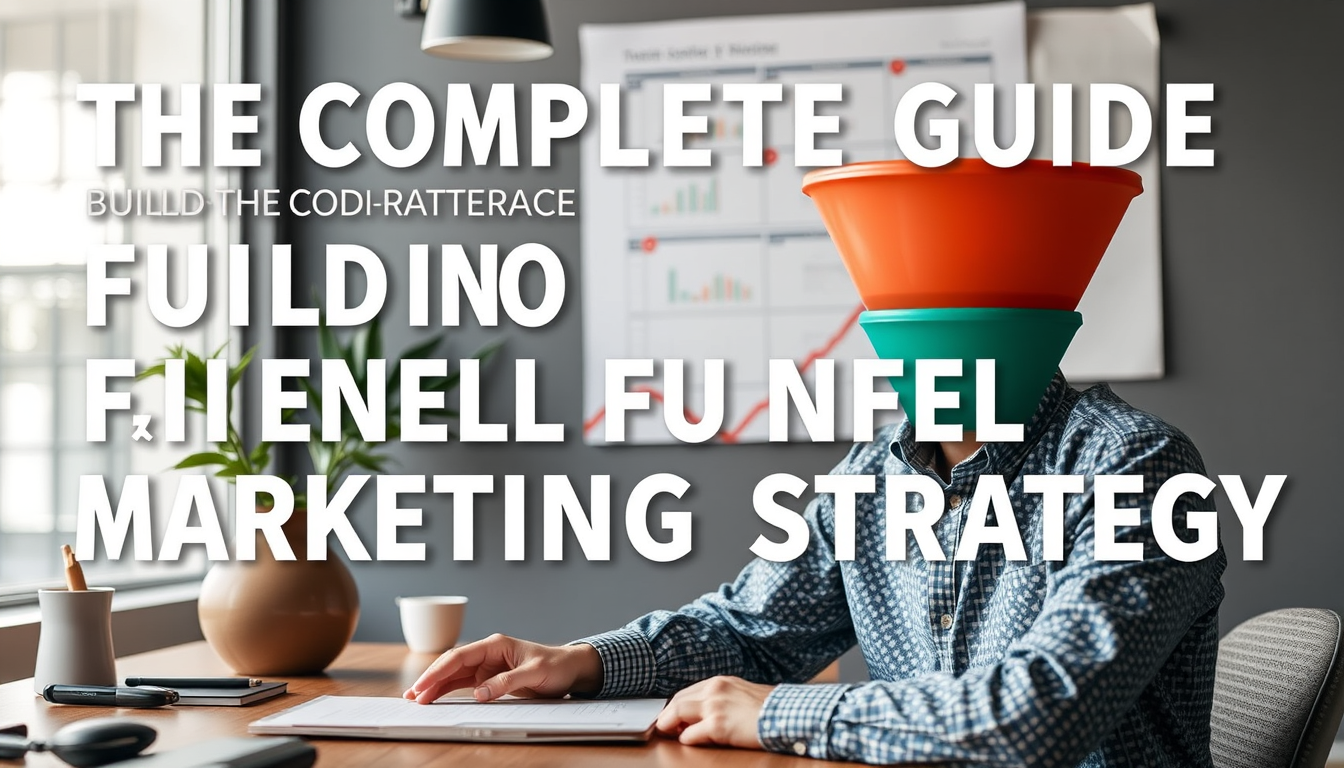
Sustainable business growth is built on a predictable system, not a collection of disconnected tactics. Yet, many businesses operate with a “broken” funnel: their blog generates traffic but no leads, their social media earns engagement but no conversions, and their ads get clicks but no sales. This disconnect is a costly leak that wastes budgets and misses opportunities.
A full-funnel marketing strategy is the solution. It is the integrated blueprint that maps, influences, and optimizes every single stage of the customer’s journey; from initial Awareness (Top-of-Funnel, or TOFU), through Consideration (Middle-of-Funnel, or MOFU), to the final Decision (Bottom-of-Funnel, or BOFU).
Instead of just chasing “Buy Now” clicks, an expensive and unsustainable approach, this strategy builds a complete system. It’s the difference between asking for a sale on a first date and building a long-term relationship that leads to loyalty. This guide provides the complete, step-by-step framework to build that holistic strategy, stop the leaks, lower your Customer Acquisition Cost (CAC), and predictably turn strangers into your most profitable customers.
What is a Full Funnel Marketing Strategy?
Your ads are getting clicks, but no one is buying. Your blog is getting traffic, but no leads. Your social media is getting “likes,” but your revenue is flat. This is a classic symptom of a “broken” funnel, a collection of disconnected tactics.
A full funnel marketing strategy is an integrated plan that addresses every single stage of the customer’s journey. It maps a path from the moment they first hear about your brand (Awareness), to the point they trust you (Consideration), to the moment they buy from you (Decision), and finally, to the point they advocate for you (Loyalty).
Think of it this way: a bottom-funnel-only approach is like asking a stranger to marry you on the first date. A full funnel marketing strategy is the entire relationship: the first introduction, the dates, the engagement, and the long-term partnership. This guide provides the complete blueprint to build a holistic strategy that stops “leaks” and turns strangers into your most profitable customers.
Overview
A full funnel marketing strategy is a comprehensive plan that guides a customer through their entire journey, from first-time “Awareness” (TOFU), to “Consideration” (MOFU), and finally to “Decision” (BOFU). It aims to fix the “leaky bucket” problem where businesses lose customers by only focusing on one stage (like ads) without building trust. Creating a full funnel strategy involves 5 steps:
1) Map the customer journey,
2) Set KPIs for each stage,
3) Choose content and channels for each stage,
4) Create and optimize the assets, and
5) Measure and optimize the entire system based on data.
Why Every Business Needs a Full-Funnel Marketing Strategy
A full-funnel marketing strategy is essential because it moves your marketing from a collection of random, disjointed activities to a single, cohesive growth engine. Most marketing plans fail because they are “leaky buckets”-they spend a fortune on ads to get customers in the top, only to lose them through a disconnected and confusing experience.
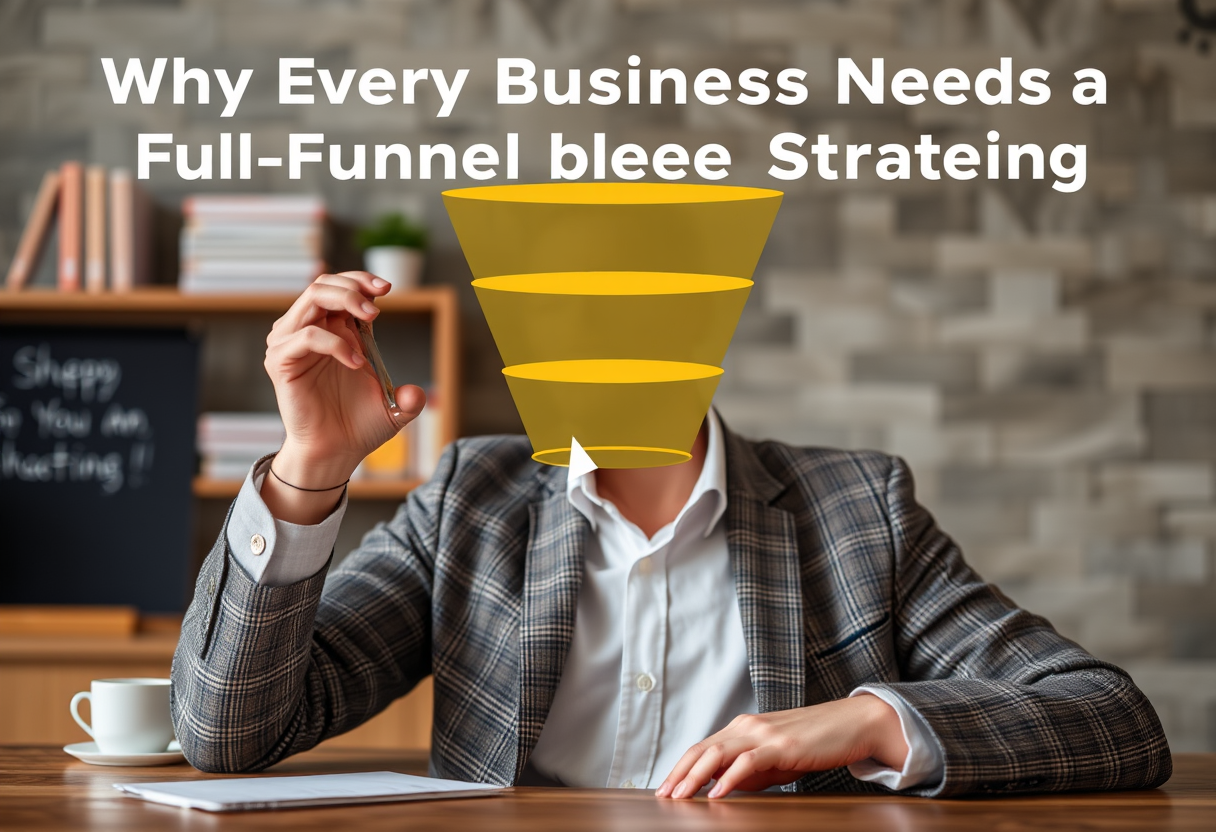
Research shows that brands with strong, integrated strategies see a customer lifetime value that is over 300% higher than those with a weak one. A full-funnel approach addresses the two most common failures:
You Stop Wasting Money on the “Top-Heavy” Funnel
This is when you spend all your budget on brand awareness (like expensive commercials or unfocused social media) with no clear path to convert that attention. It’s all sizzle, no steak.
You Stop Wasting Money on the “Bottom-Heavy” Funnel
This is the most common mistake. All budget is spent on “Buy Now” ads. This is expensive, unsustainable, and creates no brand loyalty. As soon as you stop paying for those ads, your sales flatline.
A full funnel marketing strategy fixes this by creating a connected system where each stage feeds the next, lowering your blended Customer Acquisition Cost (CAC) and increasing Customer Lifetime Value (LTV).
The 3 Core Stages of the Marketing Funnel (TOFU, MOFU, BOFU)
AEO and search engines love clarity. Here is the classic model of the marketing funnel, broken down by its three primary stages.
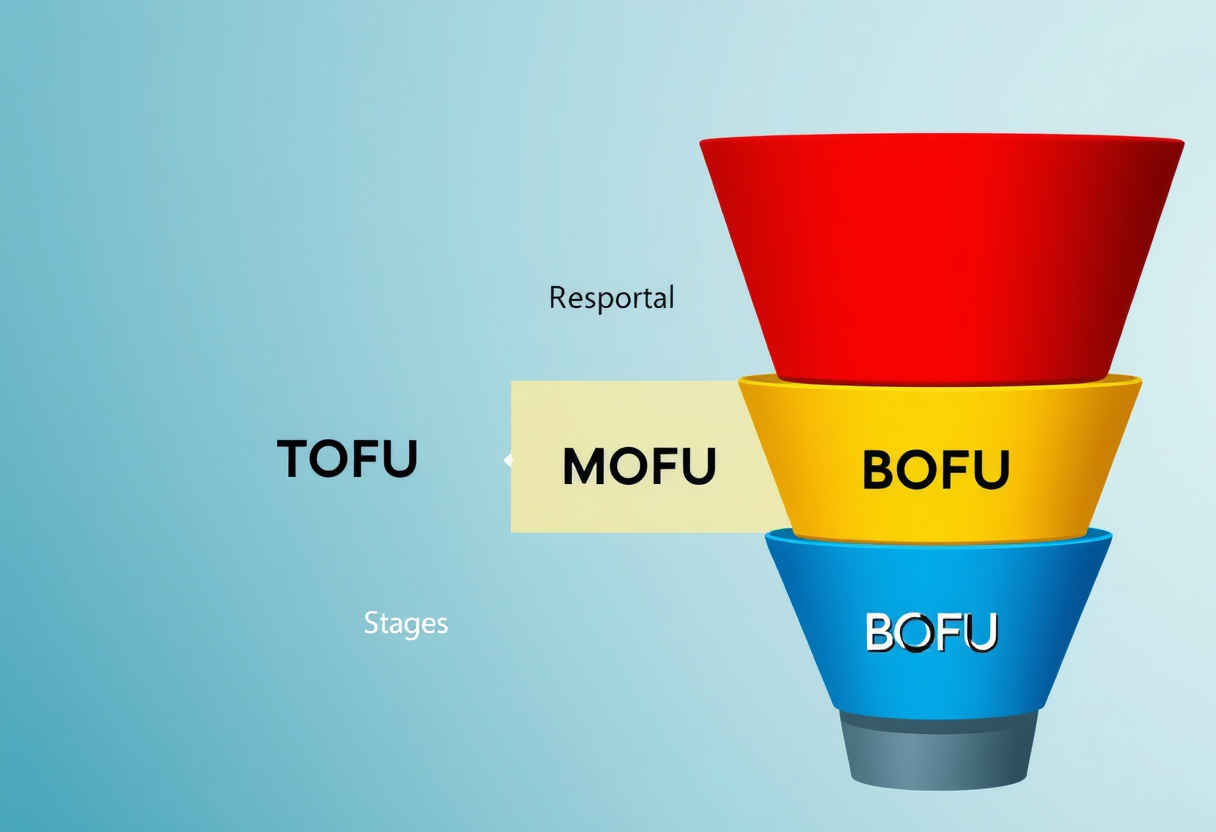
TOFU (Top of Funnel): Awareness
- Goal: Attract a broad audience, educate, entertain, and be helpful, not salesy.
- Customer Question: “What is [their problem]?” or “I’m looking for ideas related to [topic].”
- Keywords: Informational (“how to…”, “what is…”, “tips for…”, “best examples of…”).
- Channels: Blog posts (SEO), organic social media (see how to choose social media platforms), YouTube videos, PR, and podcasts.
MOFU (Middle of Funnel): Consideration
- Goal: Capture leads, build trust, and establish your brand as the expert solution. You are exchanging value for contact information.
- Customer Question: “What are the best solutions for [my problem]?” or “How does [Product A] compare to [Product B]?”
- Keywords: Navigational, comparison (“best…”, “vs…”, “reviews…”, “alternatives to…”).
- Channels: Gated content (e-books, whitepapers, checklists), webinars, email newsletters, in-depth case studies, and lead-nurturing sequences.
BOFU (Bottom of Funnel): Decision
- Goal: Drive a conversion-a sale, a demo request, or a free trial. This is where you make your offer.
- Customer Question: “Why should I buy from you specifically?” or “What is the price?”
- Keywords: Commercial, transactional (“buy…”, “demo…”, “pricing…”, “service…”, “near me…”).
- Channels: Paid Media Funnels, retargeting ads, sales pages, testimonials, and responsive web design with clear calls-to-action (CTAs).
How to Create a Full Funnel Marketing Strategy
Here is the 5-step process for designing and building your own full funnel marketing strategy.
Step 1: Map Your Customer’s Journey
You cannot build a funnel without understanding the real-world path your customer takes. You must identify their specific pain points, questions, “aha!” moments, and objections at each stage (TOFU, MOFU, BOFU). This research results in detailed user personas that form the foundation of your entire strategy.
If you are launching a new product or entering a new market, partnering with a go-to-market strategy agency can compress this mapping phase significantly.
Step 2: Set KPIs & Goals for Each Stage
This is essential for measurement. You can’t just have one goal (sales). You must measure the health of each stage of the funnel.
- TOFU Goal: Grow New Visitors, Reach, Impressions, and New Followers.
- MOFU Goal: Increase Lead Magnet Downloads, Email Subscribers, and Webinar Registrants.
- BOFU Goal: Drive Sales, Demo Requests, and improve Conversion Rate. This entire process is about knowing how to track performance with analytics to see where your funnel is “leaking.”
Step 3: Choose Your Channels & Content for Each Stage
Now, you map your content plan to the journey.
- TOFU Content: Create helpful, search-optimized blog posts, short-form videos (TikToks/Reels), and infographics. This is the core of your Content Marketing Essentials.
- MOFU Content: Create gated e-books, in-depth case studies, and automated email nurture sequences.
- BOFU Content: Create powerful testimonials, demo videos, detailed sales pages, and compelling introductory offers.
Step 4: Create Your Content Assets
This is the execution phase. You must create the Digital Marketing Assets for each stage. The quality and optimization of these assets are critical. Your blog post must be optimized for SEO (see Content Optimization), your e-book must be professionally designed, and your sales page must be persuasive.
Step 5: Measure and Optimize (Closing the Loop)
A strategy is a cycle, not a straight line. Use your analytics from Step 2 to find the leaks and fix them.
- Example 1: High TOFU traffic but low MOFU leads? Your lead magnet isn’t compelling, or your CTA is weak. Solution: A/B test a new e-book title or a new CTA button color.
- Example 2: High MOFU leads but low BOFU sales? Your nurture sequence is failing, or your pricing page is confusing. Solution: Re-write your nurture emails or simplify your checkout process.
Bonus Stage: The Post-Purchase Funnel (Retention & Advocacy)
This is the advanced strategy that separates good brands from great ones. The funnel doesn’t end at the sale; the most profitable stage is after the first purchase.
Stage 4: Loyalty
- Goal: Keep your existing customers happy, increase their Lifetime Value (LTV), and upsell/cross-sell them.
- Channels: Customer-only email newsletters with exclusive value, exceptional customer service, and loyalty programs.
Stage 5: Advocacy
- Goal: Turn your loyal customers into your volunteer sales force.
- Channels: Referral programs (“Give $20, Get $20”), user-generated content (UGC) campaigns, and prompting for positive reviews. This directly feeds a powerful Influence Marketing Strategy, as your customers become your most authentic nano-influencers.

Full Funnel Marketing in Action (B2B vs. B2C Examples)
This is how the strategy looks in the real world.
B2C Example (E-commerce Brand)
- TOFU: A viral-style TikTok Reel showing the product used in a unique, creative way.
- MOFU: A retargeting ad on Instagram offering “10% Off Your First Order” in exchange for an email signup.
- BOFU: An automated abandoned cart email sequence reminding the user of the exact product they left behind, creating urgency to purchase.
B2B Example (SaaS Company)
- TOFU: A top-ranking, in-depth blog post on “How to Solve [Specific Industry Problem]” that attracts qualified traffic from Google.
- MOFU: A free webinar or downloadable whitepaper (lead magnet) promoted at the end of the blog post, which captures the user’s business email.
- BOFU: An automated 5-day email nurture sequence that provides more value, builds trust, and ends with a clear invitation to book a 1-on-1 demo.
How PMG Builds Your Full Funnel Marketing Strategy
A full funnel marketing strategy is a complex system with dozens of interconnected moving parts. It requires a high-level strategic architect to design the blueprint and a team of specialists to execute perfectly at every stage. This is the exact purpose of our Fractional CMO service.
Our Fractional CMOs are experts at designing and managing your entire funnel. We don’t just advise; our agency team executes the plan.
- TOFU Strategy: We build your Brand & Advisory plan and create the Content Marketing that attracts your ideal audience.
- MOFU Strategy: We design the compelling Digital Marketing Assets (like e-books and case studies) to capture qualified leads.
- BOFU Strategy: We build the high-conversion Paid Media Funnels and Web Design optimized to close the sale.
See how we’ve built and managed full-funnel systems that drive real revenue in our Case Studies.
If you are ready to move from framework to execution, Pure Marketing Group offers fractional CMO services and full-funnel management for growth-stage companies. We have built full-funnel systems across verticals including franchise, professional services, and direct-to-consumer. Our case studies document the work at /casestudies/.
Frequently Asked Questions (FAQs)
1. What is the difference between a marketing funnel and a customer journey?
A Customer Journey is the customer’s perspective of their experience with your brand (their thoughts, feelings, and touchpoints). A Marketing Funnel is the marketer’s model used to categorize and influence that journey. The journey is the “what,” and the funnel is your “how.”
2. What are the most important metrics for a full funnel strategy?
It’s not one metric; it’s a chain of metrics. For TOFU, you track Traffic and Reach. For MOFU, you track your Cost Per Lead (CPL) and Lead-to-Customer Rate. For BOFU, you track your Customer Acquisition Cost (CAC) and Return on Ad Spend (ROAS).
3. Can a small business use a full funnel marketing strategy?
Absolutely. It’s arguably more important for a small business, as it ensures you don’t waste your limited budget. A simple small business funnel could be a great local SEO blog post (TOFU), an email sign-up for a 10% discount (MOFU), and an easy-to-use e-commerce checkout (BOFU).
4. How does SEO fit into a full funnel strategy?
SEO is the primary engine for your TOFU and MOFU stages. You use informational keywords to attract users at the top of the funnel and comparison/commercial keywords to capture leads in the middle of the funnel.
5. What is the role of content marketing in the funnel?
Content is the fuel for every single stage. It’s the blog post that attracts (TOFU), the e-book that captures (MOFU), and the case study that converts (BOFU). A content marketing strategy is a full funnel strategy.
Stop Building Silos. Start Building a System.
Random acts of marketing lead to random results. Your business deserves a predictable, scalable growth engine. A full funnel marketing strategy is the only way to build that system, ensuring every piece of your marketing works together to turn strangers into your most profitable advocates.Ready to design your company’s high-performance full funnel strategy? Contact a PMG strategist today for a consultation.