
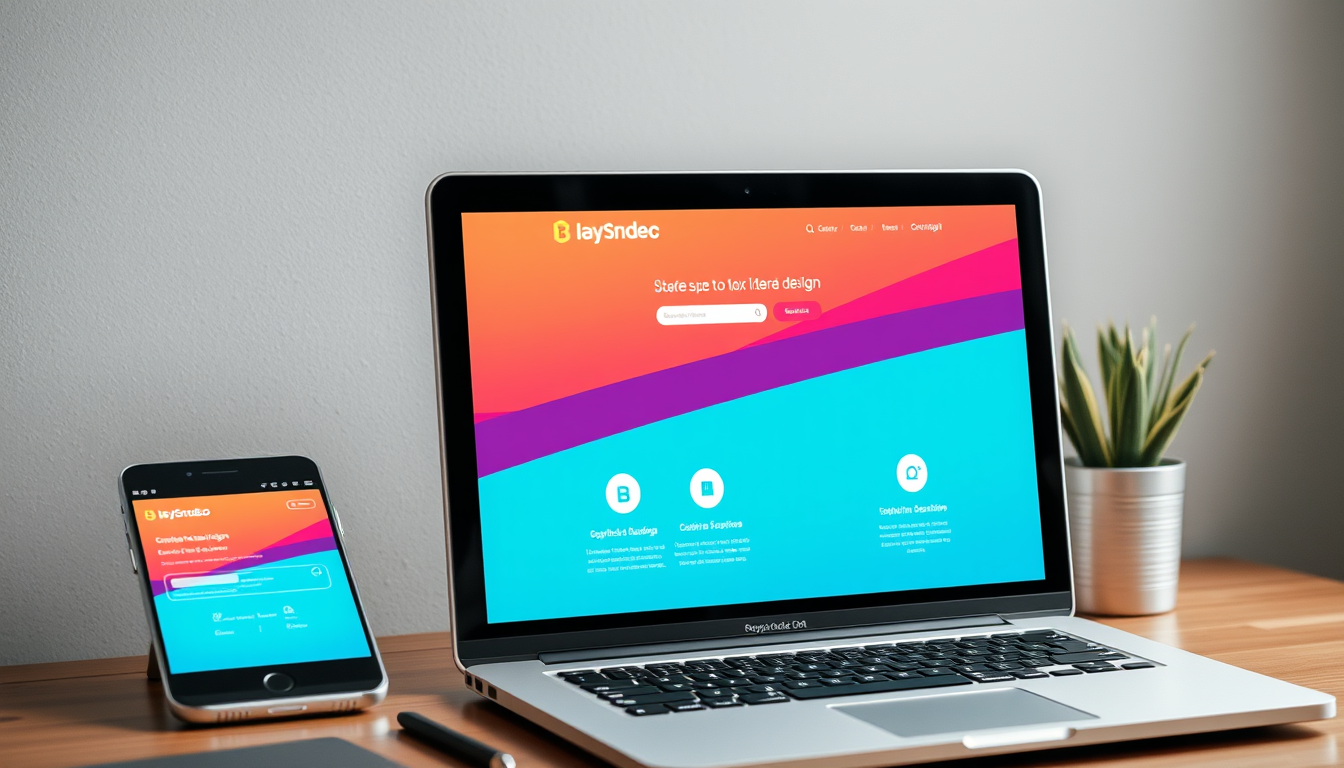
A potential customer lands on your website from their smartphone, ready to engage. Instead, they’re met with microscopic text, buttons too small to tap, and a layout that requires frustrating pinching and zooming. They leave in under five seconds. This isn’t a hypothetical scenario; it’s the daily reality for businesses that neglect a responsive web design.
Many businesses still operate with a website that’s either clunky on mobile or requires users to pinch and zoom their way through content. The result? High bounce rates, poor user experience, and a significant blow to their online credibility and search engine rankings.
This guide will demystify responsive web design, explaining why it’s a cornerstone of modern web presence, its profound impact on your SEO and user engagement, and how it can transform your website into a powerful, accessible tool for growth.
What is Responsive Web Design?
Responsive web design is an approach to web development that makes websites render well on a variety of devices and window or screen sizes. Instead of creating separate websites for desktop, tablet, and mobile, a single responsive website automatically adjusts its layout, images, and content to fit the screen on which it’s being viewed.
Think of it like a smart chameleon: your website detects the screen size and orientation of the device accessing it and instantly rearranges itself to provide an optimal viewing and interaction experience. No more horizontal scrolling, tiny text, or broken layouts. Just seamless, user-friendly access, every single time. It’s about flexibility, accessibility, and ensuring a consistent brand experience across every digital touchpoint.

4 Reasons Why Responsive Web Design is Non-Negotiable in 2025 (and Beyond)
The digital landscape has fundamentally shifted. Here’s why responsive web design isn’t just a trend, but a critical investment:
1. Mobile-First Indexing by Google
This is a huge one for SEO. Google primarily uses the mobile version of your content for indexing and ranking. If your mobile site is disorganized, your entire site’s search performance will suffer, regardless of how well your desktop version performs. A well-executed responsive web design ensures that Google sees a fast, user-friendly, and comprehensive version of your site, which boosts your search engine rankings.
Google primarily uses the mobile version of your content for indexing and ranking. Our internal data reveals that businesses launching a fully responsive website with optimized fluid grids and compressed media frequently see a massive reduction in bounce rates. This sends a massive positive signal to search algorithms, accelerating organic keyword growth and overall domain authority.
2. Superior User Experience (UX)
Frustrated users leave. A non-responsive site leads to difficult navigation, tiny buttons, and endless zooming, a surefire way to drive visitors away. Responsive web design provides an intuitive, pleasant experience across all devices, leading to:
- Lower Bounce Rates: Users stay on your site longer.
- Higher Engagement: Users interact more with your content and calls to action.
- Increased Conversions: A smooth experience makes users more likely to complete a purchase, fill out a form, or subscribe to your newsletter.
3. Cost-Effectiveness and Maintenance
Maintaining one responsive website is far more efficient and cost-effective than managing separate desktop and mobile versions.
- Single Codebase: Easier to update, fix bugs, and implement new features.
- Unified SEO Strategy: You only need to manage one set of SEO efforts.
- Reduced Development Time: No need to build and maintain multiple sites.
4. Future-Proofing Your Website
New devices with new screen sizes are constantly emerging. A responsive design is inherently more adaptable to these future changes, meaning your website won’t become obsolete with the next gadget release. It’s an investment in longevity.

The 5 Core Principles Behind Effective Responsive Web Design
Building a truly effective responsive web design isn’t just about shrinking elements; it’s about a thoughtful application of key principles:
1. Fluid Grids
Instead of fixed-width layouts, responsive sites use fluid grids that are based on percentages. This allows elements to stretch or shrink proportionally as the screen size changes, maintaining spatial relationships.
2. Flexible Images and Media
Images and videos are often the biggest culprits of slow-loading mobile sites. Responsive web design ensures that media automatically scales down (or up) and, where necessary, uses different resolutions or lazy loading to optimize performance for each device.
3. Media Queries
These are CSS techniques that allow a website to apply different styles based on device characteristics like screen width, height, and resolution. This is how the website “knows” to rearrange elements or change font sizes for specific breakpoints.
4. Mobile-First Approach
The best practice for modern responsive web design is to design for mobile devices first, then scale up for tablets and desktops. This ensures a lean, fast, and user-focused experience from the outset, as mobile environments demand ruthless efficiency.
5. Prioritize Content and User Flow
A responsive site must intuitively guide the user through the content, regardless of device. This means carefully considering which information is most critical for mobile users and ensuring calls-to-action are easily accessible.

Build a Website That Works Everywhere with Pure Marketing Group
A website that merely exists is a missed opportunity. A website built with expert responsive web design is a powerful marketing asset that delivers consistent experiences and drives tangible results. At Pure Marketing Group, we specialize in crafting websites that are not only beautiful but are also high-performing, user-friendly, and optimized for every screen size.
Our approach begins with a strong foundation in Branding and Advisory, ensuring your website’s design genuinely reflects your core identity and strategic goals. We then leverage our expertise in Web Design & Development to build custom, responsive sites that provide an exceptional user experience and are engineered for conversions.
Our Digital Marketing Assets are designed to seamlessly integrate with your responsive site, from optimized landing pages to engaging multimedia content. For businesses needing top-tier strategic oversight, our Fractional CMO service can guide your entire digital presence strategy. You can see the transformative impact of our work in our Case Studies.
Frequently Asked Questions (FAQs)
1. Is responsive web design the same as having a separate mobile site?
No, they are different. A separate mobile site (often on an m.domain) means you have two distinct websites to manage. Responsive web design uses a single codebase that adapts to different screen sizes, offering a unified user experience and making maintenance much simpler.
2. How does responsive design affect my SEO?
It significantly improves it! Google strongly prefers responsive websites because they are easier to crawl, index, and manage. A good responsive web design leads to better mobile rankings, reduced bounce rates (a positive signal to Google), and a single URL for all content, which simplifies linking strategies.
3. Will responsive design make my website load slower?
Not if implemented correctly. In fact, a well-optimized responsive site should load faster on mobile. Techniques like serving appropriately sized images, minimizing code, and mobile-first development ensure quick loading times, which is critical for both user experience and SEO.
4. Can I convert my existing non-responsive website to a responsive one?
Yes, it’s often possible. However, the complexity depends on your current website’s age, structure, and underlying technology. It can range from minor CSS adjustments to a more substantial redesign and re-platforming. A professional web development firm can assess your current site and recommend the best approach.
5. How much does responsive web design cost?
The cost varies widely based on the complexity of your website, the number of pages, custom functionalities, and the extent of content migration. While it might seem like a larger initial investment than a basic, non-responsive site, the long-term benefits in terms of SEO, user experience, and reduced maintenance costs almost always make it the more economical and strategic choice.
How does responsive web design affect mobile-first indexing?
Google now heavily prioritizes the mobile version of your website when deciding how to rank your pages in search results. A responsive web design uses a single codebase to automatically adjust layouts, images, and text to perfectly fit mobile screens. This ensures Google crawlers can easily read and index your content without encountering broken layouts or slow loading media.
The Bottom Line
Responsive web design is no longer a luxury; it’s a fundamental requirement for any business that wants to succeed online. It’s the silent workhorse that ensures your brand is accessible, engaging, and highly visible to every potential customer, no matter how they choose to connect with you. By embracing responsiveness, you’re not just updating your website; you’re future-proofing your business and creating a digital experience that truly resonates.
Ready to build a website that works flawlessly everywhere?
Contact us today for a consultation. Let’s design your seamless digital future.