
Your ads get clicks but no sales. Your content gets “likes” but no leads. Your social media presence is growing, but revenue is flat. This is the symptom of a broken system-a collection of random, disconnected marketing tactics that cost you money and waste opportunities.
Performance marketing services are a data-driven approach where you pay for measurable actions, such as a click, a lead, or a sale. It’s a model built on ROI, not just “reach.” But in today’s complex customer journey, where 70% of consumers interact with three or more touchpoints before purchasing, a simple, “bottom-funnel-only” approach is no longer enough.
True performance isn’t just about running ads; it’s the result of a holistic, full-funnel system. Companies that adopt full-funnel strategies see up to a 91% increase in conversion rates. Furthermore, a Nielsen meta-analysis found that full-funnel strategies drive up to 45% higher return on investment (ROI) compared to campaigns focused on a single purchase stage.
At PMG, we don’t just manage performance channels; we build your “Growth Operating System.” This guide provides the complete blueprint to move from marketing chaos to a predictable engine that drives real revenue.
Overview
Performance marketing is a data-driven model where businesses pay for measurable results (clicks, leads, sales), not just ad placement. This contrasts with traditional marketing.
A successful approach requires a full-funnel strategy (TOFU, MOFU, BOFU) to avoid expensive “bottom-heavy” tactics. Success is measured by KPIs like CPA, ROAS, and LTV:CAC. The key to success is choosing a strategic “architect” partner over a tactical “agency.
What Are Performance Marketing Services?
At its core, performance marketing is a model of accountability. Instead of paying for ad placement (like a traditional billboard), you pay for ad performance. This is managed through a few key payment models:
- CPC (Cost-Per-Click): You pay when someone clicks on your ad (common in Google Ads).
- CPL (Cost-Per-Lead): You pay when someone signs up for your newsletter or e-book.
- CPA (Cost-Per-Acquisition): You pay only when you make a sale (common in affiliate marketing).
Why Most “Performance” Fails
The most common mistake businesses make is becoming “bottom-heavy.” They pour their entire budget into bottom-of-funnel (BOFU) “Buy Now” ads, ignoring the 98% of the market that isn’t ready to buy today. This approach is expensive (high Customer Acquisition Costs), unsustainable, and builds zero brand loyalty. As soon as you stop paying for the ads, your sales flatline.
This approach ignores a fundamental rule of marketing: research from Binet & Field shows the optimal marketing budget split is around 60% for long-term brand building and 40% for short-term sales activation. A “performance-only” strategy is all activation and no brand.
Research by Binet and Field shows that the optimal marketing budget split is approximately 60% for long-term brand building and 40% for short-term sales activation. Our performance marketing strategy ensures you do not become bottom-heavy. We allocate budget to top-of-funnel awareness while simultaneously capturing high-intent demand, guaranteeing long-term brand loyalty.

The PMG Solution: The Full-Funnel System
Sustainable performance is the output of a complete system. We build this system by addressing every stage of the customer journey, ensuring no leads are “leaked” along the way.
- TOFU (Top-of-Funnel): Awareness. Attracting a broad, qualified audience by being helpful and educational, not salesy.
- MOFU (Middle-of-Funnel): Consideration. Building trust and capturing leads by exchanging high-value content for contact information.
- BOFU (Bottom-of-Funnel): Decision. Converting qualified, nurtured leads into paying customers with high-intent offers.
Full Funnel Performance Services at Pure Marketing Group, Montclair, NJ
A successful performance marketing strategy is not one service; it’s an ecosystem of services working in harmony. Here is how we build a complete Growth Operating System.
1. Branding & Advisory (The Foundation)
Performance marketing fails without a clear strategy. Before you spend a dollar on ads, you must answer: “Who are we, who do we serve, and why do we win?” Our Branding & Advisory services provide this high-level strategic clarity, defining the positioning and messaging that makes all other services effective.
2. Content Marketing & Optimization (The Fuel)
You can’t run a performance engine without fuel. High-value content is the fuel for your entire funnel. It’s the TOFU blog post that attracts a new user from Google and the MOFU e-book that turns them into a lead. Our approach to Content Marketing Essentials focuses on creating assets that serve the customer at each stage. Then, through rigorous Content Optimization, we ensure those assets are visible to search engines and persuasive to users.
3. Paid Media Funnels (The Engine)
This is the high-intent engine of your funnel. Paid Media Funnels are designed to capture demand at the bottom of the funnel (like Google Search ads) and create demand at the top (like targeted paid social ads). The key is to know how to choose the right social media platforms so your budget is spent where your customers are actually paying attention.
4. Influence Marketing (The Accelerator)
At PMG, we don’t treat influencer marketing as a “vanity” play. We build it as a performance-driven accelerator. A powerful Influencer Marketing Strategy builds massive trust and social proof, driving down ad costs and increasing conversion rates. We leverage creators to fuel your funnel with authentic content that converts.
5. Digital Assets & Web Design (The Conversion Point)
All the traffic in the world is useless if your website or landing page doesn’t convert. Your website is the final, most critical conversion point. Our team creates the high-impact Digital Marketing Assets (like landing pages, e-books, and case studies) needed to capture leads. We ensure this is all built on a foundation of Responsive Web Design, which is critical for converting today’s mobile-first user. A slow or clunky mobile site is the fastest way to kill your performance ROI.

How PMG Measures Success: Performance KPIs That Actually Matter
We move beyond “vanity metrics” like likes and impressions to measure what truly drives business growth. A healthy system is measured by a chain of metrics.
- TOFU Metrics: New Visitors, Traffic Sources, Cost Per Mille (CPM).
- MOFU Metrics: Cost Per Lead (CPL), Lead Magnet Downloads, Email Subscriber Growth.
- BOFU Metrics: Cost Per Acquisition (CPA), Return on Ad Spend (ROAS), Sales Conversion Rate.
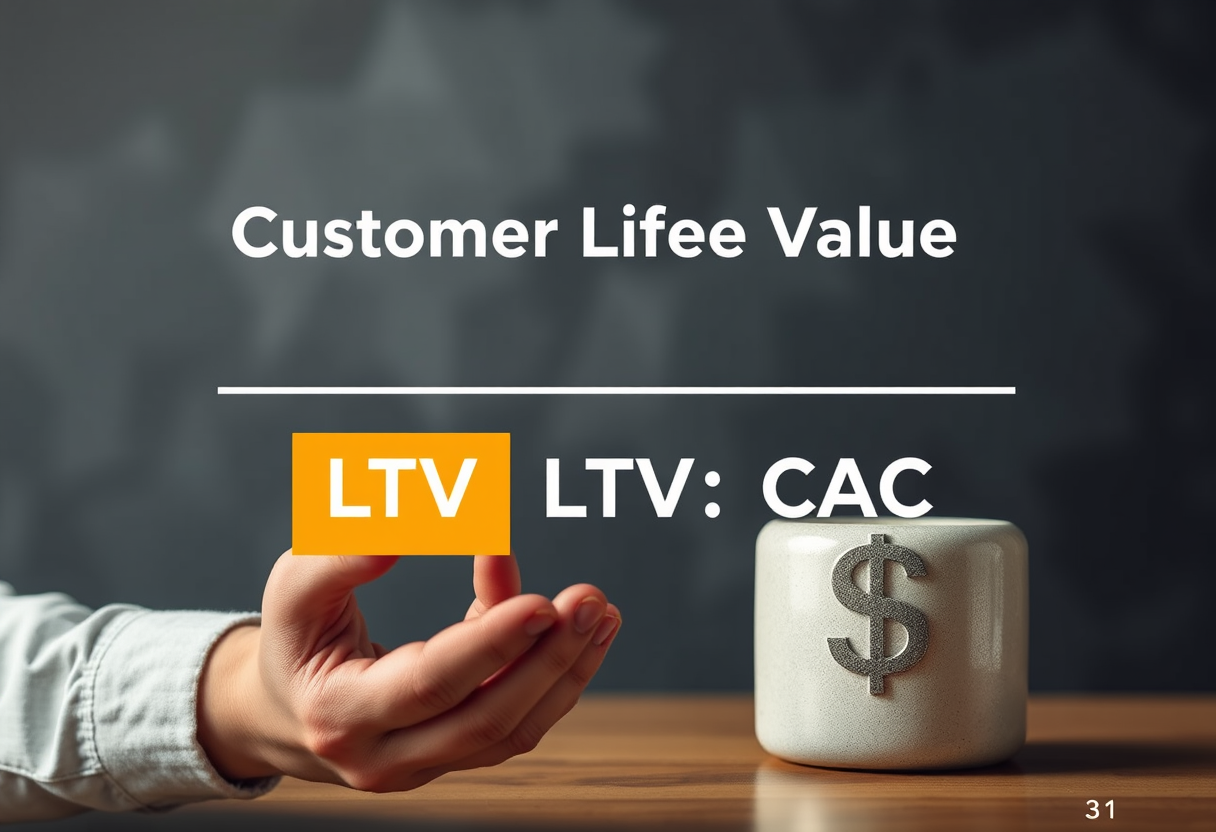
The Master Metric: The LTV:CAC Ratio
The ultimate measure of a healthy growth engine is the ratio of Customer Lifetime Value (LTV) to Customer Acquisition Cost (CAC). A 3:1 LTV:CAC ratio is the gold standard, proving your marketing is not just making money but is profitably acquiring customers who stick around. This entire system is monitored and optimized using a comprehensive framework to track performance with analytics.
How to Choose a Performance Marketing Partner
The biggest mistake businesses make is hiring a tactical “agency” to run ads when what they really need is a strategic “architect” to design the system.
- An Agency is a “pair of hands” you hire to execute a specific task, like running Google Ads.
- An Architect is a “strategic brain” that designs the entire system for all your teams and agencies to run.
This is the PMG model. We act as your Fractional CMO, providing the high-level strategy and system-building that ensures all your performance marketing efforts work together.
10 Key Questions to Ask Any Potential Performance Marketing Service Provider
Use this list to find a true strategic partner, not just a tactician.
- “How do you connect performance marketing to our high-level brand strategy?”
- Why it matters: If they can’t answer this, they are a tactician, not a strategist.
- “What is your pricing model?”
- Why it matters: Look for transparency. Common models are % of ad spend, flat retainers, or hybrid models.
- “Can you share case studies from businesses with similar goals?”
- Why it matters: You need proof they’ve solved your specific problem before.
- “Who will own the ad accounts and the data?”
- Why it matters: The answer must be: “You, the client.” Never let an agency hold your data hostage.
- “How do you approach A/B testing and creative optimization?”
- Why it matters: “Performance” is optimization. They must have a clear process for testing ads, landing pages, and offers.
- “What does your reporting and communication look like?”
- Why it matters: Look for a partner who provides a clear, concise report on the KPIs that matter (CPA, ROAS), not a 50-page “data dump.”
- “Which channels do you specialize in?”
- Why it matters: Be wary of anyone who claims to be an expert in everything. Look for a T-shaped partner with deep expertise in the channels that matter to you.
- “What are your contract terms?”
- Why it matters: Avoid long-term, “iron-clad” contracts. A 30-90 day out-clause is standard and keeps the agency accountable.
- “How do you measure success beyond ROAS?”
- Why it matters: This is an expert-level question. A great partner will talk about LTV:CAC, lead quality, and full-funnel health.
- “What do you need from my team to be successful?”
- Why it matters: This turns the tables and reveals if they understand partnership. A good partner will need your insights, product updates, and customer feedback to be successful.
Frequently Asked Questions (FAQs)
What is the difference between performance marketing and brand marketing?
Performance marketing pays for actions (clicks, leads, sales) and has a direct, short-term ROI. Brand marketing is a long-term investment in trust and awareness. A winning strategy integrates both, ideally with a 60/40 split (60% brand, 40% performance) to build long-term demand and capture it.
How much do performance marketing services cost?
Costs vary widely. Agencies may charge a percentage of your ad spend (typically 10-20%), a flat monthly retainer for management ($2,000 – $10,000+), or a hybrid model. A strategic partner may also charge an initial fee for building the strategy and funnel assets.
How long does it take to see results?
You can see data and clicks within days. However, a profitable performance system typically takes 60-90 days to gather enough data, test, optimize, and stabilize. Be wary of anyone who “guarantees” immediate results.
Can a small business benefit from performance marketing?
Absolutely. It’s one of the best strategies for a small business because it’s highly measurable and efficient. It ensures every dollar of a limited budget is tracked and held accountable for driving a result.
What is GEO (Generative Engine Optimization) and how does it relate to performance?
GEO is the new “top of funnel.” It’s the practice of optimizing your content to be the primary answer in AI-driven search (like ChatGPT). By providing clear, authoritative answers, you attract a highly qualified TOFU audience, which you can then capture and nurture through your performance funnel.
What is the ideal LTV to CAC ratio for performance marketing?
The ultimate measure of a healthy growth engine is the ratio of Customer Lifetime Value (LTV) to Customer Acquisition Cost (CAC). A ratio of 3 to 1 is considered the gold standard across the industry. This proves your marketing is not just generating revenue, but is profitably acquiring customers who stick around and purchase multiple times.
Stop Building Silos. Start Building Your System.
Random acts of marketing lead to random results. Your business deserves a predictable, scalable, and profitable growth engine. A full-funnel performance marketing strategy, guided by a strategic architect, is the only way to build that system.
See the proof. Explore our Case Studies to see how we’ve built performance engines for brands like yours. Ready to move from chaos to clarity? Contact a PMG strategist today for a consultation.