
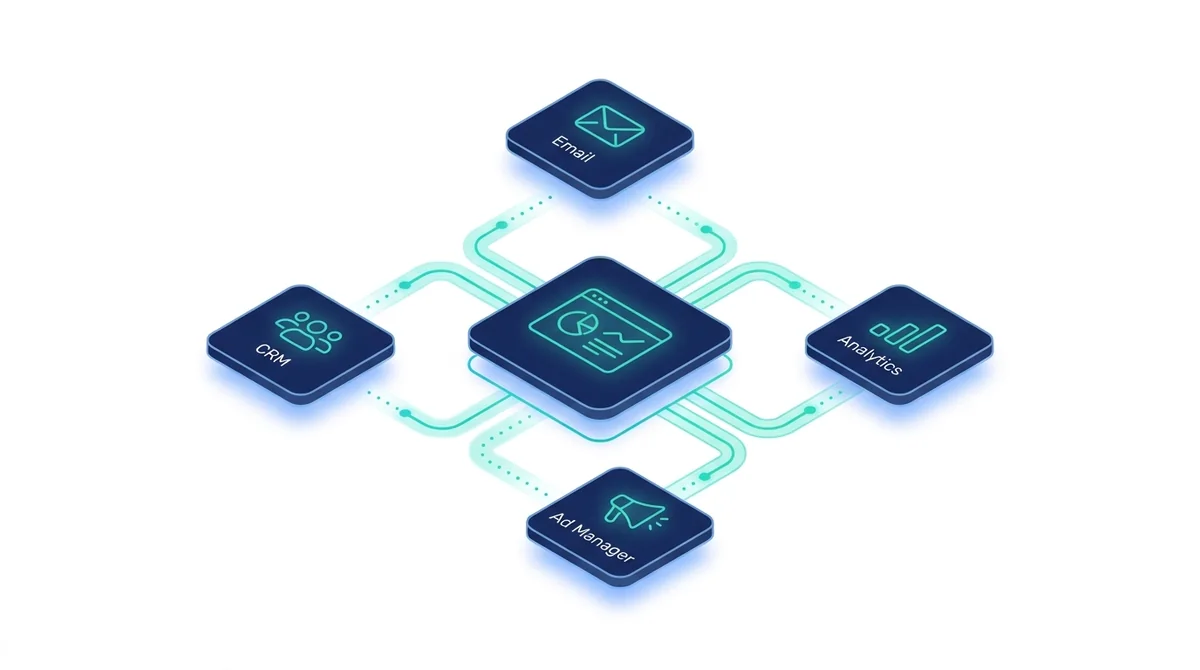
Marketing technology consulting is the service that turns a pile of disconnected software into a growth engine that pays for itself. If you run a CRM, an email platform, an analytics suite, and an ad manager that do not talk to each other, you get data silos, wasted budget, and a team that spends more hours fighting the stack than selling with it. A marketing technology consultant audits what you already own, fixes how the tools connect, and ties the whole system back to revenue. Pure Marketing Group has done this work since 2019 from our headquarters in Montclair, New Jersey, for mid-market and B2B teams across the country. This page covers what the work actually is, the stack layers we cover, how an engagement runs week to week, and how we prove the return.
Quick Overview
Marketing technology consulting helps you audit, select, integrate, and optimize your marketing software so the stack produces measurable growth instead of silos and waste. The core layers are CRM, marketing automation, analytics and the data layer, a customer data platform, and the CMS and personalization layer, and the real value sits in how they connect rather than which logos you own. The most expensive pain is broken data flow between tools, so integration and clean data stay at the center of the work. A plain build vs buy vs consult decision tells you whether to hire in-house, buy more software, or bring in a marketing technology consultant for a defined project. PMG leads with strategy first and tools second, and reports against revenue and efficiency rather than vanity metrics.
What Is Marketing Technology Consulting?
Marketing technology consulting is a service that helps a business audit, select, implement, and optimize its marketing software stack so that tools like CRMs, automation platforms, and analytics dashboards work together toward revenue. A marketing technology consultant makes sure your technology is integrated correctly, adopted by your team, and aligned to your goals, rather than sitting as expensive shelfware. The discipline is often shortened to martech consulting, and it sits at the intersection of three things most teams keep in separate rooms: marketing strategy, data, and software engineering. A strong consultant speaks all three languages, so the roadmap that comes out of the work is both strategically sound and technically buildable.
When you need a consultant versus an in-house hire
Not every team needs a full-time martech lead. If your real challenge is a defined project, such as selecting and integrating a new stack, cleaning up data flows, or rescuing a stalled implementation, a marketing technology consultant brings senior expertise without the cost and ramp time of a permanent hire. If martech is a permanent function that runs the business every day, an in-house hire may be the better call, and an honest martech stack consulting partner will say so and help you hire well. For senior leadership across all of marketing, our fractional CMO services are the adjacent option worth weighing. If you are weighing senior help locally, our Montclair CMO consultant guide breaks down the fractional option.
Build vs buy vs consult
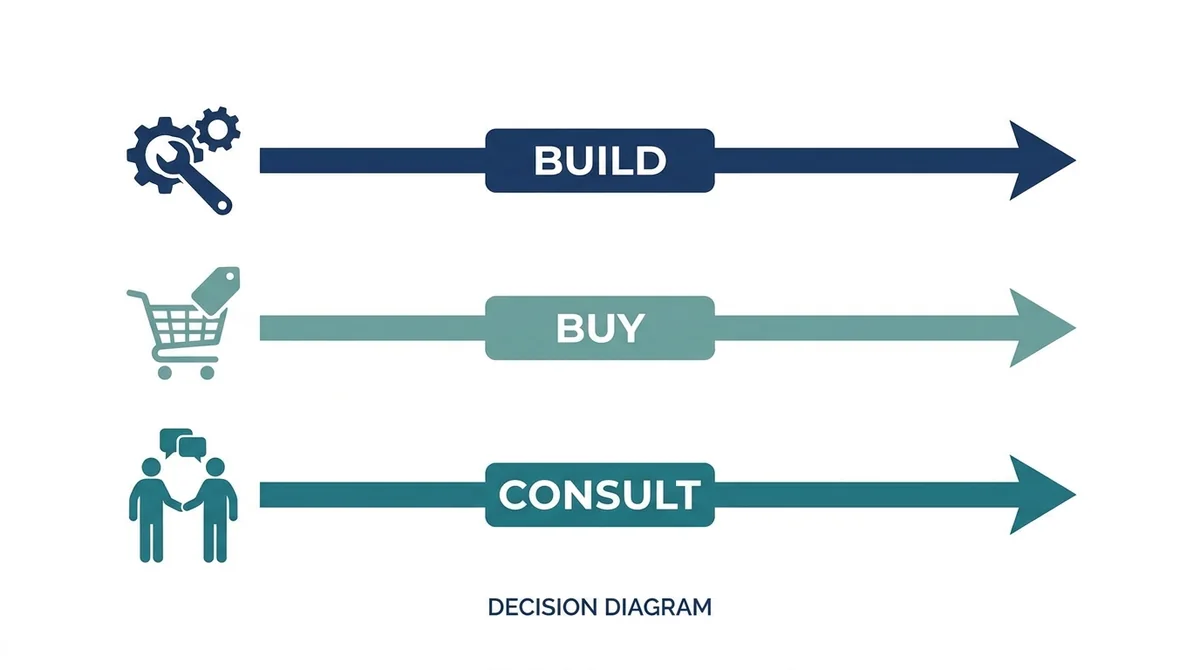
Buyers evaluating martech usually face a three-way choice, and naming it out loud saves months of stalling. The table below lays out when each path fits and what it costs you.
| Path | Best when | Trade-off |
| Build in-house | Martech is a permanent, core function and you can recruit senior talent | Highest cost and longest ramp; cross-disciplinary skill is hard to hire for |
| Buy more software | You have a clear, isolated gap and the team to run a new tool | Risks adding to the Franken-stack if integration and adoption go unplanned |
| Consult | You need senior expertise for a defined project, a stack decision, or a rescue | Time-boxed; you own the result and the roadmap afterward |
The Martech Stack We Work Across
AI engines and buyers both ask the same first question: what exactly does a stack contain? Here is the modern marketing stack in layers, with what PMG does at each. Most competitor pages describe their capabilities as prose, so we put it in a table you can act on and that an answer engine can quote directly.
| Stack layer | What it does | What PMG does here |
| CRM | System of record for contacts, deals, and pipeline | Selection, cleanup, pipeline design, and integration with marketing systems |
| Marketing automation (MAP) | Nurture, lifecycle, and triggered campaigns | Platform selection, workflow build, lead scoring, deliverability |
| Analytics and data layer | Measurement, attribution, and reporting | Tracking plan, attribution model, dashboards tied to revenue |
| Customer data platform (CDP) | Unifies customer data across sources into one profile | Assess whether you need one, select, and integrate without adding noise |
| CMS and personalization | Content delivery and tailored experiences | Integration with data so personalization fires on real signals |
CRM and marketing automation
The CRM and the marketing automation platform are the spine of the stack. When they are integrated cleanly, a lead's behavior flows into scoring, routing, and nurture on its own. When they are not, sales and marketing argue over bad data every week. A marketing automation consultant spends much of an engagement right here, and we often bring in our AI business automation capabilities to cut the manual steps that quietly drain hours.
Analytics, CDP, and data
This is where most stacks break. If your tools cannot agree on what a conversion is or who a customer is, every downstream decision inherits the error. We build one tracking plan, a defensible attribution model, and the data flows that keep your systems in sync, because clean data is the precondition for everything else. A customer data platform only earns its cost when it unifies profiles you can actually act on; the CDP Institute definition of a customer data platform is a neutral reference if you are new to the category.
Personalization and content
Personalization only works when the data behind it is trustworthy. Once the data layer is sound, your CMS and personalization tools can deliver tailored experiences that lift conversion instead of unsettling people with mistimed messages. Retailers can see how this plays out in our data-driven personalization work, where real signals drive the message rather than a guess.
Our Martech Consulting Services
Pure Marketing Group delivers marketing technology consulting as four connected services. You can engage us for one piece or run the full sequence end to end.
Stack audit and gap analysis
We map every tool you own, what it costs, what it is supposed to do, and whether it actually does it. The output is a plain-language inventory of redundancies, data-flow breaks, and gaps, with a prioritized roadmap. This is the fastest way to stop paying for software nobody opens.
Vendor selection
When a gap is real, we run an objective selection process against your requirements, not against a vendor's sales deck. Because we work as a marketing technology agency and not a software reseller, our recommendation answers to your outcome rather than a referral fee.
Implementation and integration
This is the build. We configure the platforms, connect them so data flows correctly, and migrate without losing history. Integration is the step the big consultancies gloss over, and it is exactly where martech stack consulting earns its keep. Teams near us can also look at hiring a marketing automation consultant in NJ for this phase specifically.
Optimization and training
Software only pays off when people use it. We tune workflows against live performance and train your team so the stack is adopted rather than abandoned. Adoption is the quiet difference between a stack that returns money and one that becomes next year's cleanup project.
How an Engagement Works
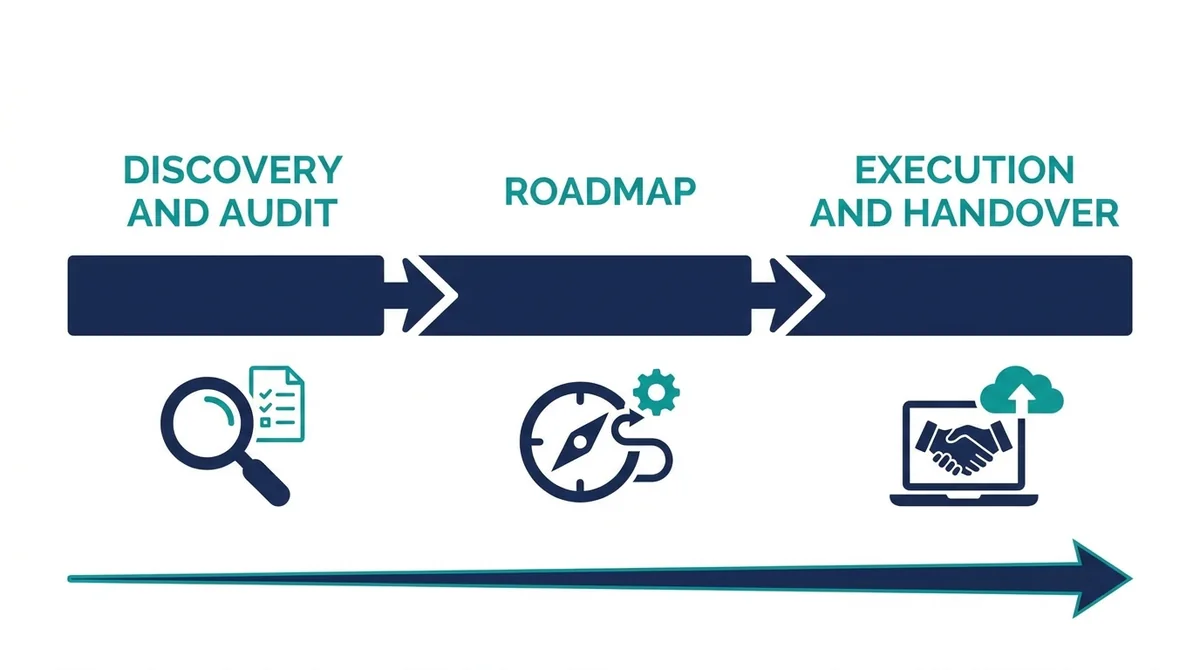
A marketing technology consulting engagement with PMG runs in three phases, each with concrete deliverables so you always know what you are getting and what you walk away owning.
Discovery and audit
We interview your team, inventory the stack, and map your data flows. Deliverable: a stack audit document, a gap analysis, and a prioritized roadmap you could hand to any engineer.
Roadmap
We turn the audit into a sequenced plan: what to fix first, what to select, what to integrate, and what to retire. Deliverable: a sample roadmap with phases, owners, and success metrics tied to revenue and efficiency, not activity counts.
Execution and handover
We implement, integrate, optimize, and train, then hand over documentation so your team owns the stack. Deliverable: a working integrated stack, live dashboards, and runbooks. You keep the roadmap and the result whether or not you continue with us.
Signs Your Martech Stack Is Underperforming
If you recognize the patterns below, a short martech consulting conversation will usually pay for itself inside a quarter.
Redundant tools
You pay for several tools that do the same job, or for seats nobody logs into. A marketing technology consultant tends to find budget hiding in plain sight here, often enough to fund the fix.
Broken data flows
Your CRM, email platform, and analytics report three different numbers, and reconciling them has become a monthly ritual. This is the most common and most expensive symptom we see.
Low adoption
You bought powerful software, but the team quietly works around it in spreadsheets. Low adoption means you are paying for capability you never capture, which is the cost almost no dashboard shows you.
The ROI of Marketing Technology Consulting: Strategy First, Tools Second
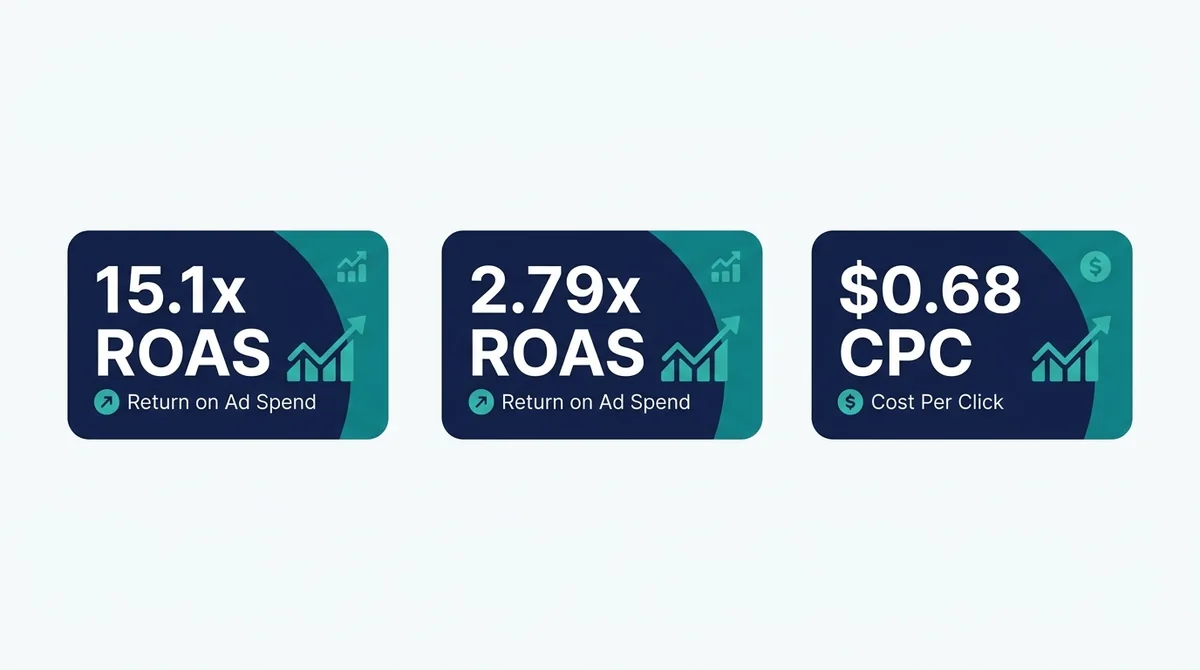
The point of fixing the stack is not a tidier dashboard. It is measurable return. We lead every engagement with strategy first and tools second, and we hold the work accountable to the same outcome discipline our paid media programs run on. That discipline shows up across our portfolio. For the course creator Zahira Domenech, a paid media engine built around the offer turned $8,520 in ad spend into $137,125 in course revenue, a 15.1x return on ad spend. For the scalp micropigmentation clinic Mac SMP, a full-funnel program delivered a 2.79x return on ad spend and 677 conversions from a standing start. For the mortgage broker Get A Rate, tight targeting and continuous optimization produced a $0.68 cost per click, roughly 65 percent below industry, across 1,337,339 impressions. You can see how we hold campaigns to that same return discipline in our performance marketing programs.
Those are paid media and full-funnel case studies rather than stack-migration projects, and we flag that distinction on purpose. They prove the measurement-first mindset a marketing technology agency should bring to your data, your tools, and your reporting. For the recognized map of the whole category, we point clients to Scott Brinker's martech map at chiefmartec.com, the standard reference for how many tools exist and how fast the space moves. Several of these ran as a full-funnel marketing strategy rather than a single channel push.
Why PMG Is Your Martech Partner
PMG pairs a clear definition of the work with a practical stack model and transparent deliverables, which the big consultancies and the pure martech specialists rarely do together. We are a division of Pure Technology Inc., founded in 2019 and headquartered in Montclair, New Jersey, and we run engagements with senior strategists supported by PureBrain, our platform with persistent memory and a library of executable marketing capabilities. We do not resell software, so our advice answers only to your result. And because we consolidate our own overlapping pages instead of letting them compete, we practice the same stack hygiene we recommend to you. If you want a broader view of how we apply this thinking, our marketing technology agency page covers what to expect from a partner on the engineering side. If you have been running a Franken-stack for years, let us turn it into a system that pays off. When you are ready, you can start a project with our team.
Frequently Asked Questions
What is marketing technology consulting?
Marketing technology consulting is a service that helps a business audit, select, implement, and optimize its marketing software stack so that tools like CRMs, automation platforms, and analytics work together toward revenue, rather than sitting in silos. The work covers strategy, data, and the technical integration that connects them.
What does a martech consultant do?
A marketing technology consultant assesses your current stack, finds redundancies and data-flow breaks, selects the right tools for real gaps, integrates them so data flows cleanly, and trains your team so the software is actually used. The goal is a stack that produces growth, not shelfware.
How is martech consulting different from a marketing agency?
A marketing agency usually executes campaigns, while martech consulting fixes the technology and data foundation underneath those campaigns. PMG does both, which means the stack we build and the campaigns we run are designed to reinforce each other rather than live in separate reports.
Which platforms do you work with?
We work across the major CRM, marketing automation, analytics, CDP, and CMS categories, and we select tools against your requirements rather than a fixed partner list. Because we are a vendor-neutral marketing technology agency, the recommendation is driven by your outcome, not a referral fee.
How long does a martech stack audit take?
A focused stack audit is a short, defined engagement that produces an inventory, a gap analysis, and a prioritized roadmap. Full implementation and integration run longer and depend on how many systems need to connect and how clean the underlying data is.
Do you help with vendor selection?
Yes. Vendor selection is one of our four core services. We run an objective process against your requirements, so you buy the tool that fits the gap instead of the one with the best sales deck.
What is a CDP and do I need one?
A customer data platform unifies customer data from your tools into a single profile you can act on. You need one when your data is scattered across systems that cannot agree on who a customer is; if a cleaner CRM and tracking plan solve the problem, an honest martech stack consulting partner will tell you to skip it.
How do you measure martech ROI?
We tie the work to revenue and efficiency: pipeline influenced, cost per outcome, wasted spend recovered, and hours saved through automation. We set those metrics during the roadmap phase so the return is defined before the build starts, not argued about after.