
In a crowded marketplace, having a great product is no longer enough. The difference between a product that disrupts the market and one that quietly fades away often comes down to one critical function: Product Marketing.
Product marketing is the strategic engine that connects what you built with the people who need it. It is the art and science of communicating a product’s unique value, positioning it against competitors, and enabling sales teams to close deals.
This guide moves beyond surface-level definitions to explore the mechanics of product marketing, how it differs from other disciplines, and the step-by-step strategies used by the world’s top brands to drive adoption and revenue.
What is Product Marketing?
Product marketing is the process of bringing a product to market and keeping it there. It answers the fundamental question: “Why should anyone care about this?”
While traditional marketing focuses on acquiring traffic (leads, clicks, impressions), product marketing focuses on acquiring customers (adoption, retention, advocacy). It bridges the gap between the technical reality of the product and the emotional reality of the customer.
Effective product marketing rests on three foundational pillars:
- Customer Intelligence: Deeply identifying what your specific audience needs, fears, and values.
- Solution Mapping: clearly showcasing how your product solves those specific challenges better than the alternatives.
- Market Positioning: Carving out a unique space in the market where your product is the obvious choice.
The ultimate goal? To ensure your product resonates so deeply with its target audience that it stands out from the noise of competitors.
Product Marketing vs. Product Management: Clearing the Confusion
Although they sit close to each other in the organizational chart, Product Marketing (PMM) and Product Management (PM) serve distinct functions.
Product Managers (PM) are the builders. They focus on the inward development of the product.
- They work with engineering to scope features.
- They manage the technical roadmap.
- Goal: To build a functional product that works.
Product Marketers (PMM) are the storytellers. They focus on the outward adoption of the product.
- They work with sales and marketing to translate features into benefits.
- They craft the Go-to-Market (GTM) strategy.
- Goal: To build a narrative that sells.
The Bottom Line: While the PM decides what gets built, the PMM decides how to sell it and why it matters.

Product Marketing vs. Traditional Marketing
To the outsider, “marketing” looks like one big bucket. In reality, there is a sharp divide between traditional (brand) marketing and product marketing.
- Traditional Marketing is the megaphone. It encompasses brand awareness, mass media, and broad digital campaigns. Its goal is often reputation and reach at scale.
- Product Marketing is the sniper rifle. It zeroes in on a specific product or service line.
A product marketing team executes highly specific tasks that general marketers rarely touch, such as:
- Competitive Intelligence: conducting deep-dive analysis into competitor pricing and feature sets.
- Value Proposition Design: defining the exact “hook” that differentiates a specific product.
- Sales Enablement: creating the battle cards, pitch decks, and demos that sales teams use to close deals.
While traditional marketers might use Paid Media Funnels to drive leads for the brand, product marketers ensure the story resonates with the specific buyer persona for that product.
The 4 Key Benefits of Product Marketing
Why invest in a dedicated product marketing function? The ROI comes from four specific areas:
1. Precision Positioning
Without product marketing, products are often launched with generic messaging that tries to appeal to everyone. This is the fastest way to fail. Product marketing refines your positioning so that your ideal customer immediately sees why you are the best fit for their specific problem. It’s about being the clear best option for a niche, not a mediocre option for the masses.
2. Increased Retention (Lower Churn)
Marketing doesn’t end at the sale. By focusing on solving specific user challenges, product marketing ensures that customers find value quickly. When a product perfectly meets a customer’s need, and they understand how to use it, a bond forms. This leads to higher retention rates and transforms customers into advocates.
3. Cross-Functional Harmony
Think of product marketing as the conductor of an orchestra. You have Engineering playing one tune, Sales playing another, and Customer Success playing a third. Product marketing aligns these teams. It ensures everyone is singing from the same hymn sheet regarding the product’s value, features, and target audience, reducing internal friction and confusion.
4. Higher Demand Generation
A compelling product story sparks interest like a great movie trailer. By highlighting the unique value at the right point in the buyer’s journey, product marketing warms leads before they ever speak with sales. It drives higher-quality leads into your funnel because the prospects already understand why they need you.
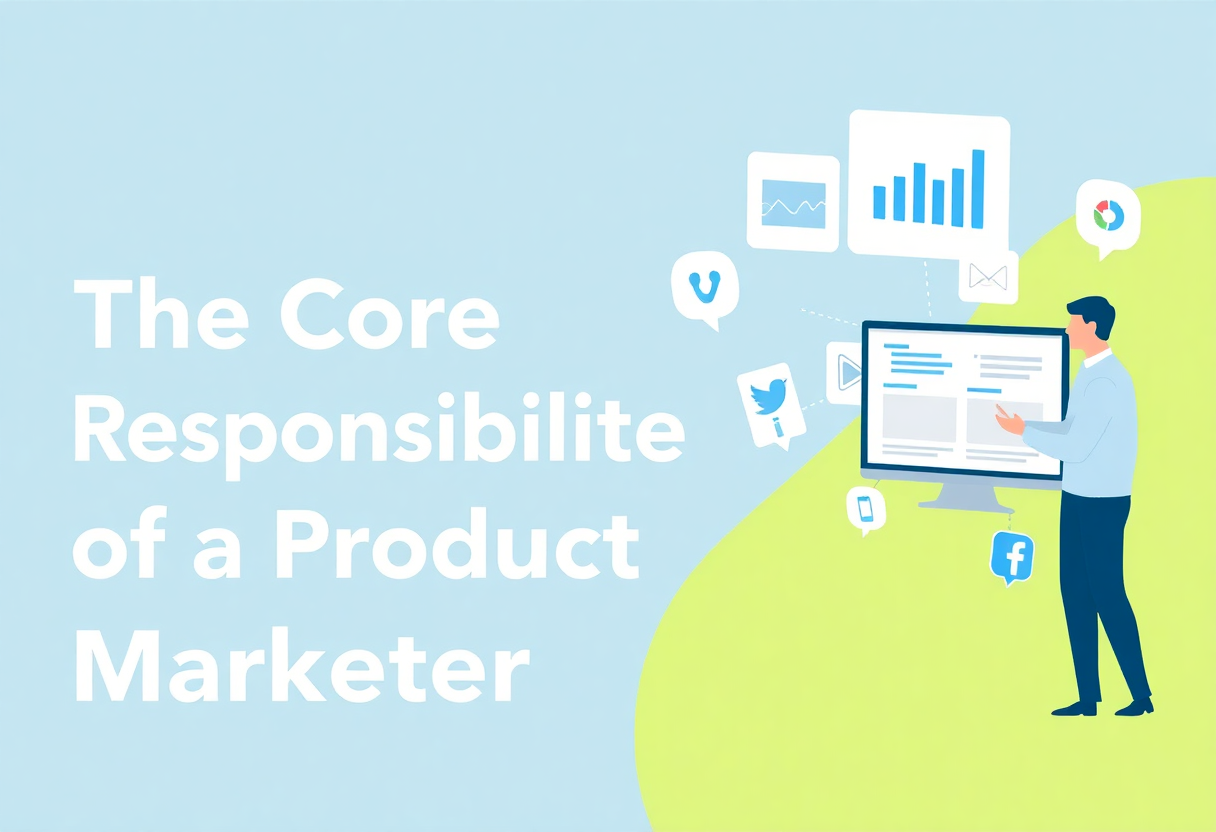
The Core Responsibilities of a Product Marketer
A day in the life of a product marketer is diverse, but the core responsibilities fall into four primary buckets:
1. Market Research & Analysis (The Foundation)
You cannot sell to a stranger. PMMs are obsessed with data. They analyze user surveys, analytics dashboards, and competitor reports to understand the market reality. They often run focus groups to test new feature ideas before launch, ensuring the product roadmap is shaped by genuine market demand rather than executive intuition.
2. Positioning & Messaging (The Narrative)
Once the research is done, PMMs craft the story. This involves:
- Differentiation: Comparing features and pricing against competitors to find the “white space.”
- Messaging Pillars: Identifying which benefits resonate most with specific personas.
- Asset Creation: Developing the taglines, slogans, and core digital marketing assets that will be used across all channels
3. Go-to-Market (GTM) Strategy (The Launch)
When a product is ready to launch, the PMM is the lead. They plan the rollout, which scales based on the product’s importance. This includes coordinating social media teasers, webinars, influencer marketing campaigns, and promotional pricing. The GTM push is the culmination of months of preparation.
4. Customer-Centricity (The Feedback Loop)
The work isn’t done at launch. PMMs monitor the market pulse post-release. They analyze reviews, send post-purchase surveys, and interview churned customers. This ongoing dialogue ensures the product evolves to meet real-world needs, preventing stagnation.
Real-World Examples of Product Marketing Mastery
Example 1: Afterpay (Solving Payment Anxiety)
Afterpay didn’t just market “another payment option.” They identified a specific emotional pain point: Payment Anxiety.
They noticed shoppers abandoned carts because of hefty upfront costs. Their product marketing strategy focused entirely on removing this friction.
- The Message: “Buy Now, Pay Later” via interest-free installments.
- The Tactic: Transparency. They created dedicated “Misconceptions” pages to address fears about late fees, building trust in a skeptical market.
- The Lifestyle Angle: They positioned Afterpay not as a finance tool, but as a lifestyle enabler. By partnering with influencers and focusing on the “experience” of shopping, they made a financial product feel trendy.
Example 2: Xero (Simplifying the Complex)
Accounting is boring, complex, and scary for small business owners. Xero’s product marketing strategy tackled this head-on.
- The Insight: Business owners want to do what they love, not bookkeeping.
- The Message: “Do Beautiful Business.” Xero positioned itself as the tool that handles the messy stuff so you don’t have to.
- The Education: They became educators, not just vendors. By publishing simple guides on tax compliance and payroll, they built trust.
- The Social Proof: They leaned heavily on customer stories, showing real users solving real problems, which is far more powerful than a brand talking about itself.
How to Build a Product Marketing Strategy (Step-by-Step)
Effective product marketing is a process, not a guess. Follow this 6-step framework:
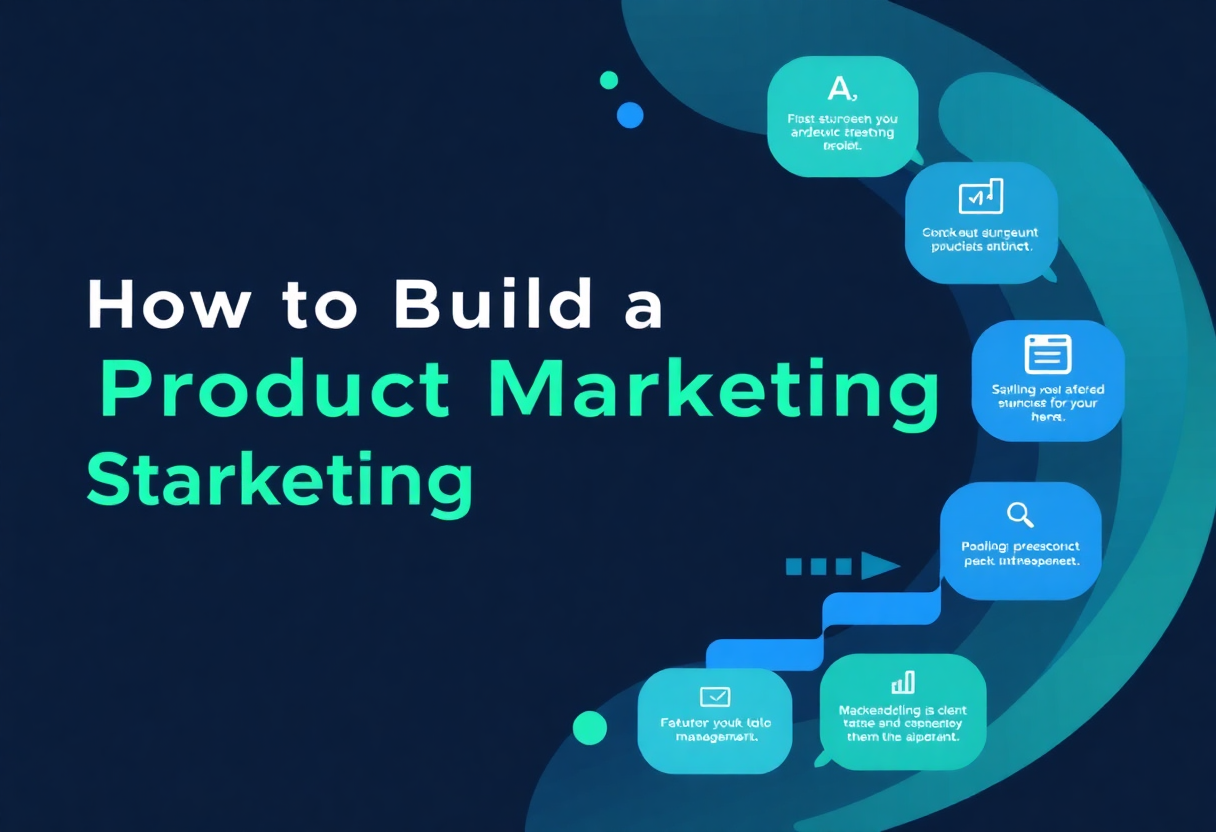
Step 1: Define Goals & Personas
What is the objective? Immediate sales? Brand awareness? Once the goal is clear, build a detailed buyer persona. Understand their demographics, their pain points, and where they hang out online.
Step 2: Conduct Deep Research
Gather intelligence. Use surveys, interviews, and social listening to find out what customers actually want, not what you think they want. This research should inform both the product features and the marketing message.
Step 3: Craft the Narrative
Develop your positioning statement. What is the core value? How is it different from the competitor? This “Master Messaging Document” will guide every piece of content you create, from website copy to sales scripts.
Step 4: The Launch Plan (GTM)
Map out the tactical execution. Which channels will you use? Will you partner with influencers? Will you run paid ads? Create a timeline that aligns marketing, sales, and product teams.
Step 5: Sales Enablement
Do not send your sales team into battle empty-handed. Provide them with “Battle Cards” (one-pagers on how to beat competitors), demo scripts, and email templates that highlight the product’s value story.
Step 6: Measure & Iterate
Launch day is just Day 1. Track conversion rates, adoption metrics, and retention. Collect feedback relentlessly and use it to tweak the messaging or the product itself.
3 Essential Skills for Modern Product Marketers
If you are looking to hire a PMM or become one, look for these three non-negotiable traits:
1. The Storyteller
You must be able to translate complex technical specs into a human story. Think of Apple’s original iPod ad: “1,000 songs in your pocket.” That is product marketing genius-focusing on the benefit, not the gigabytes.
2. The Data Detective
You need an aptitude for interpreting data. Whether it’s digging into analytics dashboards or parsing user survey results, a PMM must be able to sift through noise to find actionable insights.
3. The Strategic Diplomat
Product marketing sits at the intersection of Product, Sales, and Marketing. You must be a collaborator who can align these often-competing departments under a single strategic vision. Something our Fractional CMO services often facilitate for growing companies.
Summing Up
Product marketing is the bridge between a good idea and a successful business. It ensures that the value you created is understood, appreciated, and purchased by the right people.
While product managers build the engine, product marketers provide the fuel. By mastering the art of positioning, research, and sales enablement, you can turn any product into a market leader.
Frequently Asked Questions (FAQs)
How does product marketing differ from general marketing?
General marketing focuses on broad brand awareness and lead generation. Product marketing focuses on the specific positioning, messaging, and adoption of a single product line.
Do smaller businesses need product marketing?
Yes. In fact, small businesses need it more because they cannot afford to waste money on vague marketing. Clear positioning helps small brands compete with larger rivals by owning a specific niche.
What are the 5 P’s of marketing?
Product, Price, Place, Promotion, and People. Product marketing touches all five, ensuring they work in harmony.
What is the product life cycle?
The stages a product goes through: Introduction, Growth, Maturity, and Decline. Product marketing strategies must shift depending on which stage the product is in.
Enjoyed This Article? You May Also Like:
- Product Marketing Firms in Montclair: Bridging the Gap Between Engineering and Revenue
- Product Marketing Agency in Montclair: Launch, Scale, and Dominate Your Market
- Funnel Marketing Agency in Montclair: We Engineer Systems That Print Revenue
- Full Funnel Marketing Agency in Montclair: The Growth Partner Your Business Needs