


The digital marketing landscape is experiencing a massive paradigm shift. Generative Engine Optimization (GEO) is the latest evolution in digital strategy, specifically designed to help businesses thrive in the age of generative AI. Generative engines like ChatGPT, Google Gemini, Claude, and Perplexity AI are actively rewriting the rules of search by blending traditional retrieval functionality with the power of large language models.
Unlike traditional search engines that simply provide a list of clickable links, generative engines deliver thoughtful, multimodal responses customized to a user’s exact query. This creates a highly competitive “zero-click” environment where the AI generates the complete answer directly on the results page. If your content is not optimized for the unique way these AI platforms process and summarize data, your business will easily get overlooked.
Pure Marketing Group is more than a digital marketing agency. We serve as your entire Growth Operating System. We understand that this evolution in search requires a fundamental shift toward producing content that is not just indexed by search engines but actively understood and cited by AI systems.
Quick Overview:
Generative Engine Optimization (GEO) is the critical new frontier of digital marketing, designed to help businesses thrive as generative engines replace traditional search bars. With platforms like ChatGPT, Google Gemini, and Claude dominating the landscape, businesses must optimize their content to be retrieved and summarized in a zero click environment.
Understanding the core differences between SEO, GEO, and AEO is essential for properly structuring data, building multimodal authority, and ensuring a brand becomes the definitive answer generated by artificial intelligence.
What is Generative Engine Optimization?
Generative Engine Optimization (GEO) is the practice of structuring digital content and managing your online presence so that AI-powered search engines select and cite your business as a trusted source. This process directly influences how large language models retrieve, summarize, and present information to users.
Depending on the specific platform or vendor, you might also hear GEO referred to as Answer Engine Optimization (AEO), Large Language Model Optimization (LLMO), or Artificial Intelligence Optimization (AIO). Regardless of the terminology, the core objective remains the same: ensuring your brand is the definitive AI-generated answer.
The Convergence of Search: SEO vs. GEO vs. AEO
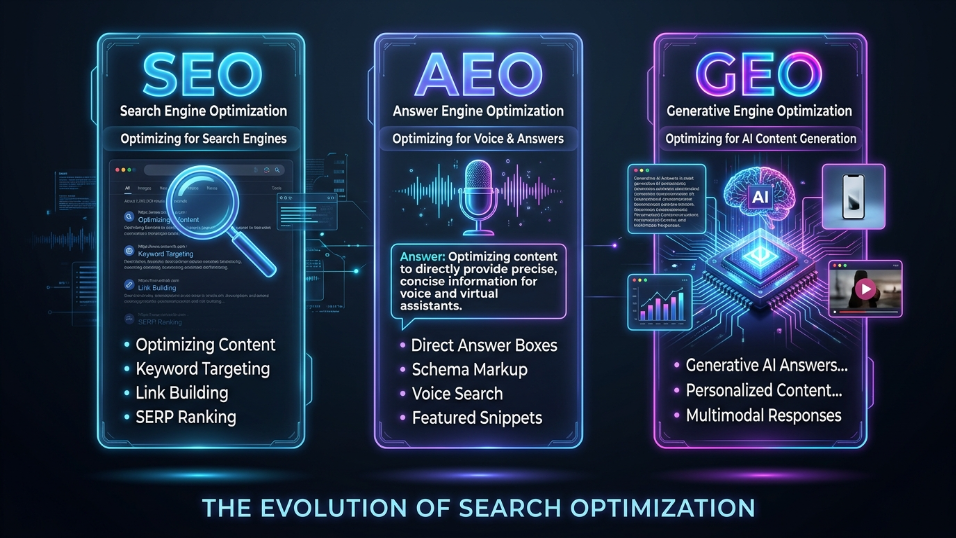
While the digital marketing industry frequently uses these acronyms interchangeably, understanding the technical distinctions between Search Engine Optimization (SEO), Generative Engine Optimization (GEO), and Answer Engine Optimization (AEO) is critical for building a resilient strategy.
The Similarities
SEO, GEO, and AEO share the exact same fundamental goal: connecting your brand with users actively searching for solutions. Furthermore, all three disciplines require a foundation of strong technical health. Whether a Google crawler or an OpenAI bot is scanning your site, they both demand fast load times, mobile responsiveness, and strict adherence to Experience, Expertise, Authoritativeness, and Trustworthiness (E-E-A-T) principles. In fact, Nick Fox, Vice President of Google Product, has stated that optimizing for AI search shares deep foundational similarities with traditional SEO.
Search Engine Optimization (SEO)
Traditional SEO focuses on achieving higher rankings on a static list of search engine results. The primary mechanism for success relies on optimizing text-based pages with specific keywords and building a robust profile of external backlinks. SEO campaigns prioritize search volume and domain authority to capture clicks from users willing to browse multiple websites.
Generative Engine Optimization (GEO)
GEO shifts the focus entirely to how Large Language Models (LLMs) like ChatGPT, Google Gemini, Claude, and Perplexity retrieve, summarize, and present information. Rather than competing for a click, GEO ensures your content is the definitive answer these engines choose to generate.
Unlike SEO, which rewards keyword density, GEO prioritizes context, clarity, conversational tone, and multimodal content. This means your strategy must include a diverse mix of text, images, and video to appeal to generative algorithms.
Answer Engine Optimization (AEO)
While AEO is frequently used as a synonym for GEO in today’s landscape, it actually predates the widespread use of large language models. AEO specifically targets systems designed to return direct, zero-click answers, such as smart voice assistants and Google Featured Snippets. As a top-tier SEO & AEO (Answer Engine Optimization) agency, Pure Marketing Group utilizes AEO to structure your data into strict Question and Answer formats so parsing algorithms can easily extract a single, definitive fact about your business.
Core Strategies for Generative Engine Optimization
Generative engines rely on clear, relevant, and highly structured information to craft their answers. To dominate this new landscape, you must implement the following GEO strategies.
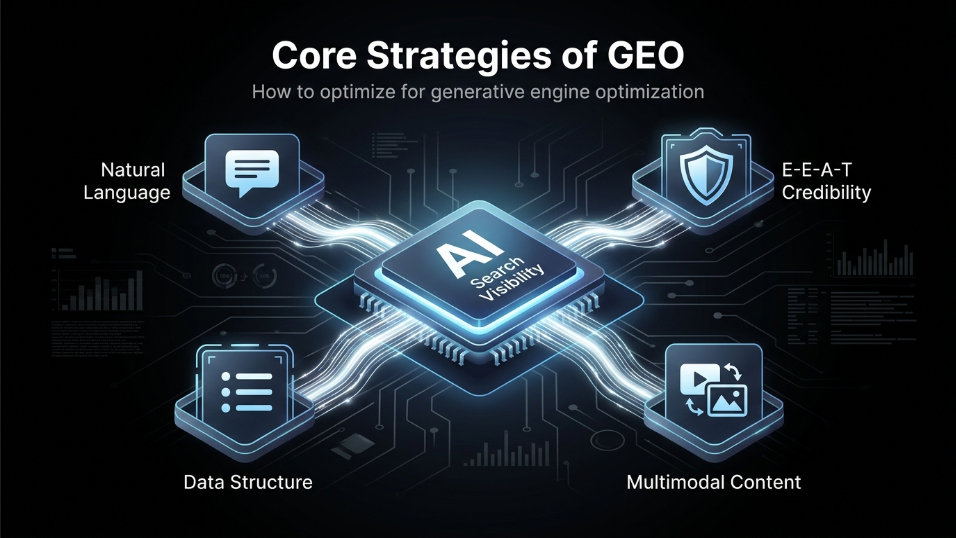
1. Speak the Natural Language of AI
Generative engines rely on natural language processing to interpret queries. Your content must feature a conversational, human tone that mirrors how people actually ask questions. Instead of relying on short keywords like “best running shoes,” you must target long-tail, question based queries such as “What are the best running shoes for beginners?”. Anticipating and answering related questions directly within your content satisfies user intent and gives the AI complete context.
2. Structure Content for Easy Parsing
AI models do not read pages like humans do. They parse data. You must structure your content clearly with question-based subheadings, bullet points, and comparison tables. Breaking your information into highly organized, easily digestible modules makes it incredibly simple for AI algorithms to understand, extract, and index your facts.
3. Build Credibility Through E-E-A-T
AI models prioritize sources with verifiable facts, data-driven insights, and clear authorship. Creating in-depth, authoritative content that directly addresses user queries is mandatory. You must prominently display author credentials, professional backgrounds, and case studies to prove your Experience, Expertise, Authoritativeness, and Trustworthiness (E-E-A-T).
4. Implement Technical Schema Markup
Just because generative engines are intelligent does not mean you can ignore technical optimization. As highlighted in technical courses on high-authority platforms like Coursera, implementing structured data and JSON-LD schema markup is critical to help AI understand your exact context. Furthermore, you must optimize your site speed and implement basic accessibility features like image alt text to ensure fast processing times for both users and AI crawlers.
5. Think Beyond Text with Multimodal Content
The true magic of generative engines is their ability to mix text, images, and videos into a single comprehensive response. If your digital footprint lacks visual variety, it may not make the cut. You must incorporate custom graphics, infographics, podcasts, and short-form video content to answer complex questions and appeal to the multimodal nature of modern search algorithms.
Tracking Your GEO Success
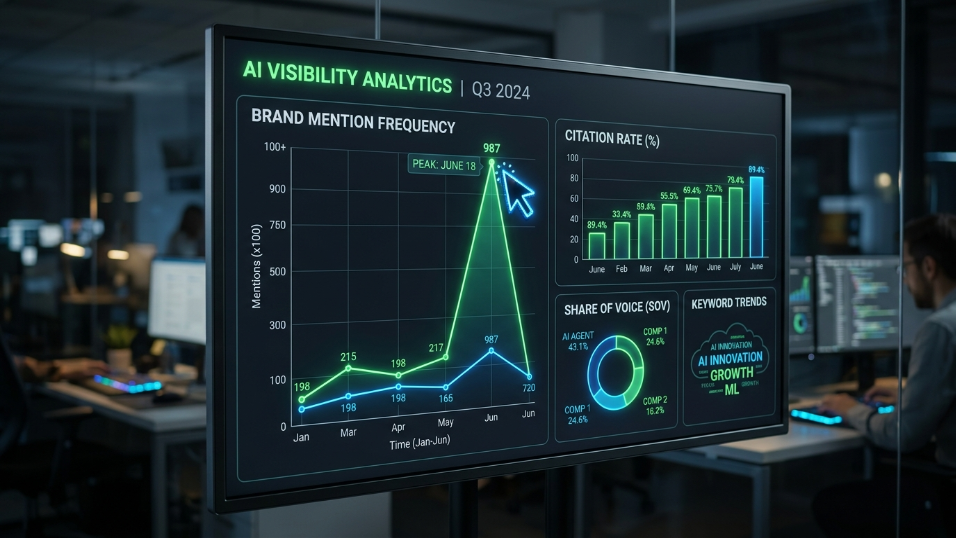
Measuring GEO success requires a completely different toolkit than traditional keyword tracking. Practitioners utilize advanced software like Ahrefs, Peec AI, Profound, and Semrush to monitor exactly how their brands are cited by large language models.
When tracking Generative Engine Optimization, you must focus on three primary metrics:
- Mention Frequency: How often your brand is included in an AI-generated answer.
- Citation Rate: Which specific URLs or domains does the AI actively link to as reference material?
- Share of Voice: How your brand’s overall visibility compares directly to your competitors within specific query sets.
How Pure Marketing Group Drives AI Search Visibility With GEO
At Pure Marketing Group, we do not just talk strategy; we deliver results. Generative engines evaluate your entire digital footprint to verify your authority. We engineer this visibility through a full-funnel approach.
We deploy highly localized and optimized press releases because we know they directly impact AI results. By building trusted backlinks and digital proof on major publications, we force AI models to recognize your topical authority. We then amplify these trust signals through our signature Experiential Giveaways and Influencer Marketing Systems. This combination of technical site structure, real-world brand activation, and massive social validation guarantees that your brand becomes the ultimate recommended answer.
Whether you are optimizing local service visibility or utilizing our LaunchBoost: GTM services to scale a Canadian tech startup into the US market, we build the systems that turn AI attention into predictable revenue.
Frequently Asked Questions (FAQs)
What does Generative Engine Optimization (GEO) mean?
Generative Engine Optimization (GEO) is the practice of structuring digital content and managing online presence to improve visibility in responses generated by artificial intelligence systems like ChatGPT, Gemini, and Claude. The goal is to ensure the AI selects and cites your content as the primary trusted source.
How is GEO different from traditional SEO?
Traditional SEO focuses on optimizing content with keywords and backlinks to rank highly in the standard search results. GEO focuses on conversational language, highly structured data, and verifiable authority to ensure a brand is actively mentioned and summarized in AI-generated conversational answers.
Do I still need technical SEO for generative engines?
Yes. Implementing technical SEO is a huge component of GEO success. You must use structured data and schema markup to help AI algorithms instantly translate the context of your page. Fast site speed and strict accessibility standards are also required for AI bots to process your data efficiently.
How do press releases improve my GEO strategy?
Press releases help your brand surface in AI search results by establishing digital proof and topical authority. Because generative models are trained on reputable third-party data, having your brand consistently mentioned and linked across high authority news platforms trains the AI to view you as an industry leader.