


The way clients find and evaluate B2B service providers has fundamentally changed. Today, up to 90 percent of B2B buyers ask AI assistants for vendor recommendations before they even begin traditional research. Furthermore, Gartner predicts a 25 percent decline in traditional search volume by 2026 as traffic rapidly shifts to AI platforms. Recent data reported by TechCrunch shows AI referrals to top websites spiked 357 percent year over year, reaching over one billion visits.
If your law firm, accounting practice, or consulting agency relies solely on traditional Google rankings, you are risking obsolescence. AI search visibility for professional services is no longer a futuristic concept. It is a mandatory revenue driver. Often referred to as Generative Engine Optimization (GEO) or Answer Engine Optimization (AEO), AI search visibility dictates whether platforms like ChatGPT, Perplexity, and Google AI Overviews recommend your firm or your competitors.
Pure Marketing Group builds full-funnel digital marketing systems that ensure you are not just found, but actively recommended by the world’s most powerful AI models. Here is exactly how we engineer that visibility.
Quick Overview:
B2B buyers are rapidly shifting their research from traditional search engines to AI assistants. For professional service firms, traditional SEO is no longer enough to guarantee visibility.
Firms can seamlessly structure their data, prove their authoritative E-E-A-T credentials, and bypass generic directories to become the undisputed, direct recommendation in AI search results by leveraging Generative Engine Optimization (GEO) and Answer Engine Optimization (AEO)
What is AI Search Visibility?
AI search visibility is a marketing metric that measures how often and how accurately a brand appears within AI-generated answers across platforms like ChatGPT, Gemini, and Claude.
Unlike traditional Search Engine Optimization (SEO) which ranks web pages based on backlinks and keywords, AI search ranks knowledge. A top ranked article on Google can be completely absent from an AI answer if the language model has not associated your brand with the specific signals it trusts.
AI systems do not read a page from top to bottom. They break content down into smaller, usable pieces through a process called parsing. These modular pieces are then evaluated for authority and relevance before being assembled into a single, coherent response for the user. To succeed, your AI search visibility comes down to four core signals: mentions, citations, sentiment, and share of voice.
Why Professional Service Firms Remain Invisible to AI
Many highly successful professional service firms find themselves completely invisible in AI search results. When prospects ask ChatGPT for the “best marketing agency for SaaS startups” or “top accountants in Chicago”, the AI rarely cites individual firm websites.
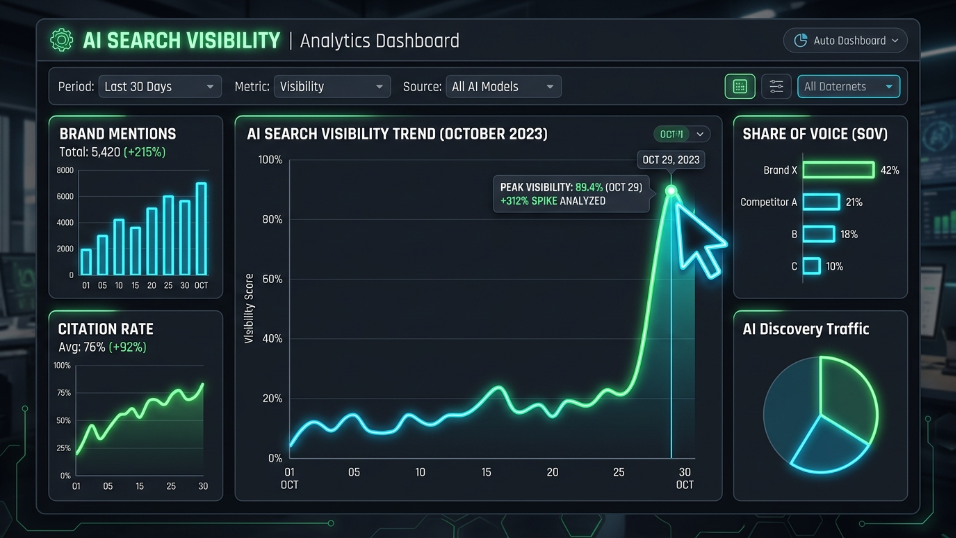
Instead, AI models heavily favor directory and review platforms like Clutch, G2, Yelp, and Thumbtack. These third-party platforms dominate because they provide exactly what AI engines crave: aggregated reviews, verified client feedback, structured comparison data, and category rankings.
If your firm wants to bypass these directories and become a direct AI recommendation, you must optimize your digital presence specifically for Answer Engines by building niche authority and specific trust signals.
Core Strategies for AI Search Visibility in Professional Services
To outrank generic directories and establish your firm as the definitive authority, you must deploy advanced Answer Engine Optimization strategies.
How should you structure content for AI comprehension?
AI models prefer highly structured data and direct answers to specific questions. You must structure your content so it is easily parsed. To align with the parsing algorithms of major AI models, you should implement the following formatting rules:
- Question-Based Headings: Use direct questions for your H2 and H3 tags. Instead of a vague heading like “Our Services”, use “What tax planning services do we offer SaaS companies?”.
- Direct Answers: Provide clear, one to two-sentence answers immediately beneath your headings to make the content highly “snippable”.
- Lists and Tables: Use bulleted lists and comparison tables to break complex details into clean, reusable segments. Avoid long walls of text that blur ideas together.
- Semantic Clarity: Keep your punctuation simple and avoid overloading sentences with multiple claims.
How do you build authoritative E-E-A-T content?
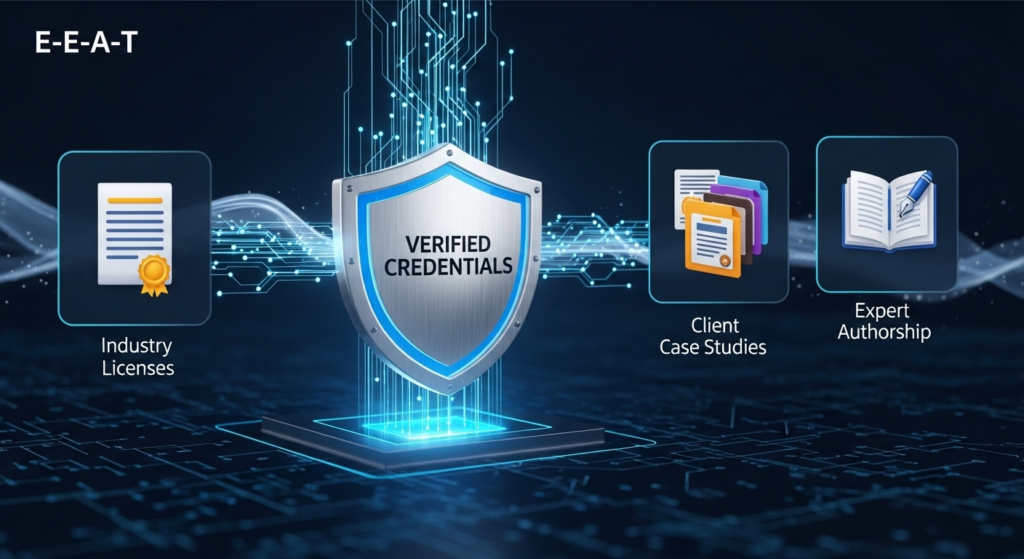
AI heavily rewards Experience, Expertise, Authoritativeness, and Trustworthiness. For professional services, generic service descriptions are useless. You must prove your expertise through highly detailed author bios featuring professional credentials, industry certifications, and measurable case studies. Content must be continuously updated to reflect current research and methodologies. Our work with clinics like Bethesda Spine & Posture demonstrates how establishing hyperlocal authority and clear medical positioning forces search algorithms to prioritize your practice.
Why target long-tail conversational queries?
Users interact with AI assistants differently from traditional search bars. AI queries are generally highly specific and conversational. Focus your content strategy on answering complex questions rather than competing for high-volume, short-tail keywords. Create content tailored to niche prompts like “What is the best legal structure for a UK SME?” to capture high-intent prospects.
How can press releases and third-party platforms boost authority?
AI models interpret external validation as a major signal of authority. Because AI frequently cites reputable third-party sources, you must strengthen your visibility on platforms like LinkedIn, Reddit, industry review sites, and top-tier publications. As part of the Pure Marketing Group strategy, we utilize highly optimized Press Releases to feed Generative AI models. Launching localized, AEO-optimized press releases generates trusted backlinks and establishes the topical authority required to force platforms like ChatGPT to recommend your services.
How does schema markup help AI understand your content?
Schema markup acts as a direct translator for AI bots. You must use JSON-LD schema to explicitly inform AI models about your firm. Implementing the FAQPage, Organization, LocalBusiness, Person, and ProfessionalService schema ensures AI can verify your team’s professional licenses, educational background, and exact service areas without guessing. You can explore the exact types of code your site needs at highly trusted, non-profit resources like Schema.org.
Key Metrics to Monitor in AI Search
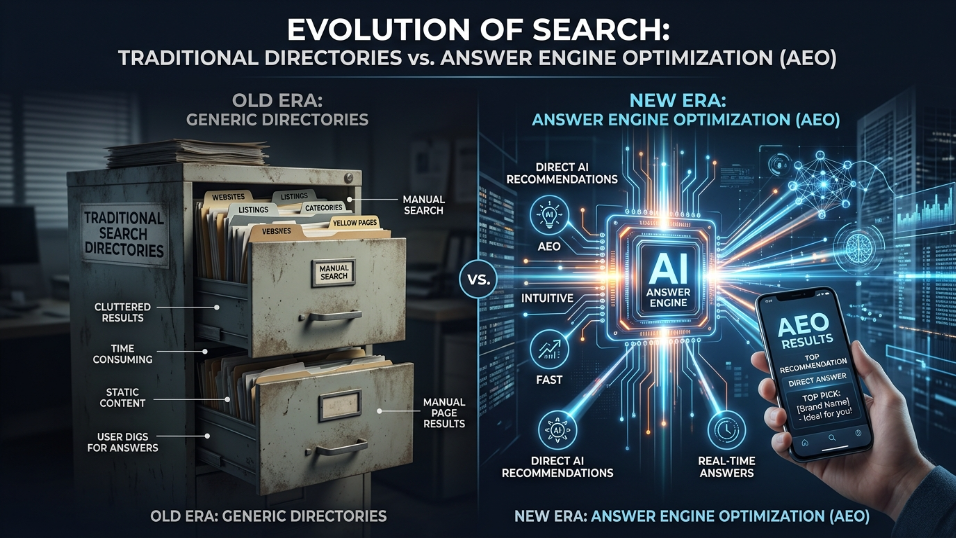
You cannot optimize what you do not measure. Moving away from traditional keyword tracking, modern marketing teams must monitor four specific AI visibility metrics:
- Brand Mentions: How frequently your brand appears in AI-generated responses tied to your key topics.
- Citations: Instances where an AI engine attributes information directly to your website or owned assets.
- Sentiment: Whether the tone surrounding your brand mention reads positive, neutral, or critical.
- Share of Voice (SOV): How frequently your brand is named relative to your peers when users ask similar questions across multiple AI tools.
Top AI Search Visibility Tracking Tools for 2026
To accurately measure mentions, citations, and sentiment across multiple language models, you need specialized tracking technology. Here are the top tools currently dominating the landscape:
- Gauge: Known for offering comprehensive tracking across multiple platforms with highly actionable content recommendations designed to drive rapid visibility uplift.
- Profound: Considered a top enterprise solution for tracking AI mentions and citations across 10 or more engines, offering SOC 2 Type II compliance.
- Peec AI: An all-around tool praised for its simple, user-friendly interface that allows marketing teams to rapidly track mentions and sentiment.
- Semrush AI Visibility Toolkit: Ideal for teams already using the Semrush ecosystem, offering a massive 239 million prompt database to analyze brand performance.
- AthenaHQ: A specialized tool built by former Google Search engineers, offering sentiment analysis and revenue attribution through robust integrations.
How Pure Marketing Unlocks Your AI Search Potential
At Pure Marketing Group, we are more than a digital marketing agency. We act as your entire Growth Operating System. Our fractional CMOs and senior strategists do not rely on junior middlemen. We build full-funnel systems that integrate SEO, AEO, Experiential Giveaways, and Influencer Marketing.
Whether you are scaling locally or utilizing our LaunchBoost GTM services to expand cross-border, we align your proprietary data, credentials, and specialized content. By doing this, we ensure your professional service firm bypasses the generic directories and becomes the undisputed recommendation across all generative search engines.
Frequently Asked Questions (FAQs)
What is the difference between SEO and AI search visibility?
Traditional SEO focuses on optimizing web pages to rank high in a list of search engine results based on keywords and backlinks. AI search visibility measures how frequently and how favorably your brand is referenced within conversational answers generated by AI platforms like ChatGPT and Perplexity. AI search rewards structured context, clear citations, and verified reputation over simple keyword density.
Why are directory sites ranking above my professional services firm in AI answers?
AI systems prioritize directory and review sites like Clutch, Yelp, and G2 because these platforms hold massive amounts of aggregated data. They offer verified reviews, structured service comparisons, and category rankings. To compete, individual firms must create highly specialized, niche content featuring proprietary case studies and strict schema markup to prove their unique authority.
How long does it take to see results from AI search visibility optimization?
Building the necessary authority for AI systems to recognize and cite your firm typically takes 60 to 90 days. This timeline involves publishing niche case studies, earning authoritative third-party mentions, implementing technical credential markup, and allowing the AI models time to scrape and process the new trust signals.
Do professional credentials impact AI search rankings?
Yes. For regulated professional services such as law, accounting, and engineering, credentials are a massive trust signal. Displaying professional licenses, industry certifications, and board memberships prominently on your site and tagging them with Person and Professional Service schema allows AI models to verify your expertise against public databases.