

Influencer marketing has evolved far beyond celebrities posting generic product photos; it is now a highly measurable engine for revenue generation and brand trust. The global influencer marketing industry is projected to reach an astounding $33 billion in 2025, with figures expected to scale to $71 billion by 2032. According to recent data, 86% of consumers make a purchase inspired by an influencer at least once a year, proving that this channel is no longer optional for growth-focused brands; hence, the importance of this influencer marketing guide.
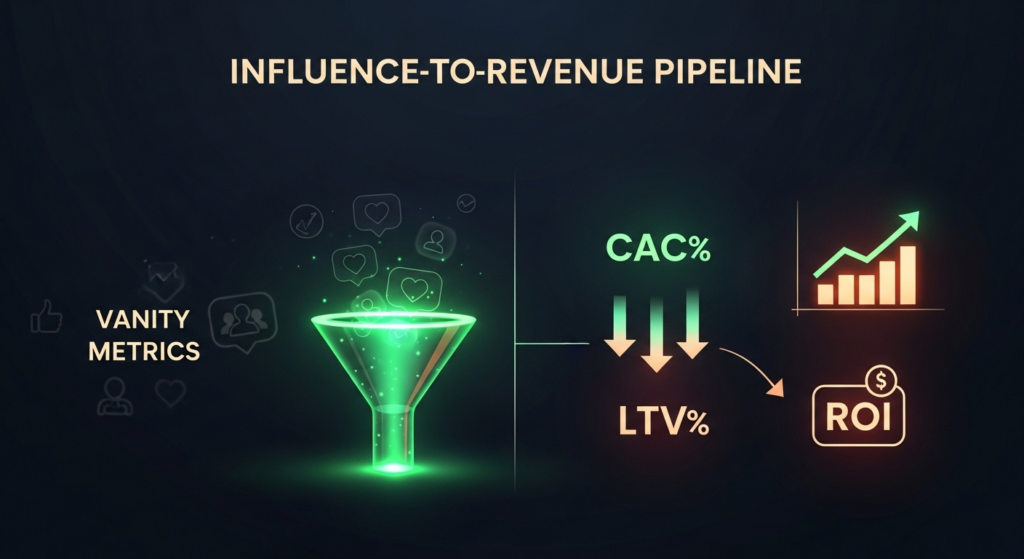
However, success in 2026 requires moving away from “vanity metrics” like likes and follower counts. For CPG brands, tech companies, and Web3 startups, a successful strategy must be ruthlessly focused on lowering Customer Acquisition Cost (CAC) and maximizing Customer Lifetime Value (LTV).
This comprehensive influencer marketing guide covers how to build a data-driven campaign, navigate creator partnerships, and unlock measurable revenue using our proven Growth Operating System.
What Are the 4 Types of Influencers?
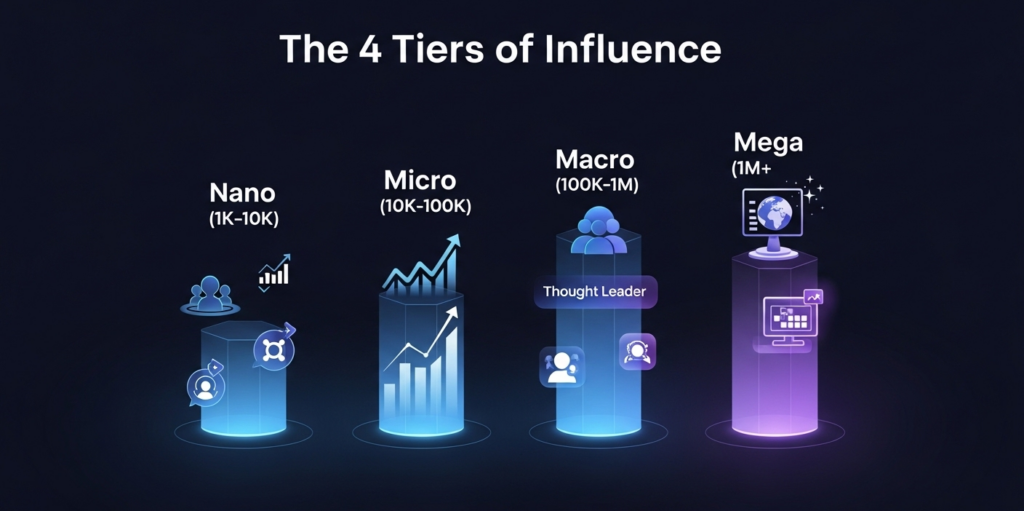
Before launching a campaign, you must choose the right tier of creator based on your financial goals and audience targeting needs. Influencers are generally classified by their audience size:
- Mega-Influencers (1 Million+ Followers): These are celebrities and massive public figures who offer unparalleled brand exposure to highly diverse audiences. While they generate massive top-of-funnel awareness, their engagement rates are often lower, and they require massive budgets.
- Macro-Influencers (100,000 – 1 Million Followers): These are established thought leaders in specific niches. They are ideal for startups seeking rapid credibility or brands launching large-scale, targeted campaigns.
- Micro-Influencers (10,000 – 100,000 Followers): The rising stars of the industry, micro-influencers captivate passionate, niche audiences with relatable, authentic recommendations. They are highly cost-effective and typically boast strong engagement rates.
- Nano-Influencers (1,000 – 10,000 Followers): Currently, 44% of brands prefer partnering with nano-influencers because they dedicate more time to partnerships and foster close-knit, highly engaged communities. They are perfect for hyper-local campaigns or highly specialized niches.
7-Step Influencer Marketing Strategy for Scalable Growth
To ensure your brand generates a measurable Return on Ad Spend (ROAS), you must approach creator partnerships with a strict, full-funnel strategy.
1. Define Financial KPIs, Not Just Vanity Metrics:
Before starting, shift your focus from tracking “impressions” to tracking exact business outcomes. You must determine how the influencer will help you lower your CAC and improve Pipeline Velocity. Are you trying to drive immediate sales, acquire leads, or build an engaged community?.
2. Choose the Right Platform and Content Format:
Different demographics require different platforms. For example, B2B technology companies may find success on LinkedIn or X, while beauty and fashion brands dominate Instagram and TikTok. Choose your collaboration type early, whether that means product gifting, co-hosting a giveaway, or a long-term brand ambassador program.
3. The Influencer Vetting Matrix:
Choosing the wrong partner can waste your budget and harm your brand safety. Audit potential creators to spot fake followers: look for spam comments, poor engagement-to-follower ratios, and sudden, unexplained spikes in followers. Ensure their audience demographics (age, location, interests) perfectly match your buyer persona.
4. Establish Clear Contracts and Outreach:
When you contact influencers, be personal, clear, and upfront about your expectations. Ensure your contract outlines payment terms, deadlines, and deliverables. Most importantly, negotiate content usage rights (whitelisting vs. organic posting) and ensure strict adherence to FTC disclosure guidelines (using #ad or #partner).
5. Provide a Brief, but Do Not Stifle Creativity:
A well-constructed brief gives creators your core messaging, brand guidelines, and target audience details. However, do not micromanage their content. Creators know exactly what resonates with their followers; restricting their creative freedom results in inauthentic, scripted content that fails to convert.
6. Launch, Amplify, and Repurpose:
Once the organic content goes live, the campaign is only half finished. You must amplify the collaboration by cross-posting the content on your own channels and utilizing Dynamic Creative Optimization. You can aggressively scale your budget on proven winners by turning the best-performing creator content into whitelisted paid social media ads.
7. Track Influence-to-Revenue Attribution:
Do not rely solely on the native analytics provided by the social platform. Utilize UTM parameters, dedicated landing pages, and affiliate pixel tracking to follow the user journey from the influencer’s post all the way to the final purchase or form submission.
Influencer Marketing Guide: Real-World Influencer Case Studies
A truly effective Digital Marketing Agency does not just promise reach; it proves revenue. Here is how we build intelligent marketing systems:
- Tracking Exact CAC in Web3 (MyStandard.io): When PMG partnered with MyStandard for the MYST Main Event Giveaway, we needed to prove exact user acquisition. We built a full-stack tracking ecosystem that attributed millions of top-of-funnel influencer impressions down to verified app downloads and wallet connections. This verified CAC data secured immense founder and investor confidence. Furthermore, our proprietary data shows that highly vetted Web3 influencer campaigns frequently double or triple standard CPG engagement rates.
- B2B Multichannel Personalization (CynoraTech): Influencer marketing isn’t just digital. For CynoraTech, we combined offline Experiential Giveaways with targeted outreach to key accounts. By sending hyper-personalized physical books and custom industry insights to decision-makers, we generated a lasting impression that secured major corporate accounts, blending physical touchpoints with digital follow-ups.
- Hyper-Local Foot Traffic (Shoreline Harley Davidson): To prove that influence drives physical revenue, we deployed highly targeted ad campaigns using hyper-local geofencing for Shoreline Harley Davidson. By targeting specific demographics in their exact region, we consistently turned digital engagement into packed-house showroom events and bike nights.
The Biggest Influencer Marketing Mistakes to Avoid
- Focusing on Follower Count Over Engagement: A creator with 2 million passive followers is far less valuable than a micro-influencer with 20,000 fiercely loyal, highly engaged community members.
- Siloed Vendor Execution: If your influencer campaign isn’t connected to your SEO strategy or your website’s conversion rate optimization, you are bleeding budget. Your agency should operate as a unified Growth Operating System.
- Ignoring Red Flags: Avoid creators with hidden profiles, copied bios, stock photography, or accounts that follow more people than follow them back.
Influencer Marketing FAQs
What is the difference between influencers and creators?
While the terms overlap, creators primarily focus on producing highly skilled, niche content (like photography, vegan recipes, or video editing) that appeals to smaller communities. Influencers operate more like personal brands or mini-celebrities, leveraging their massive visibility to drive top-of-funnel awareness and diverse audience engagement.
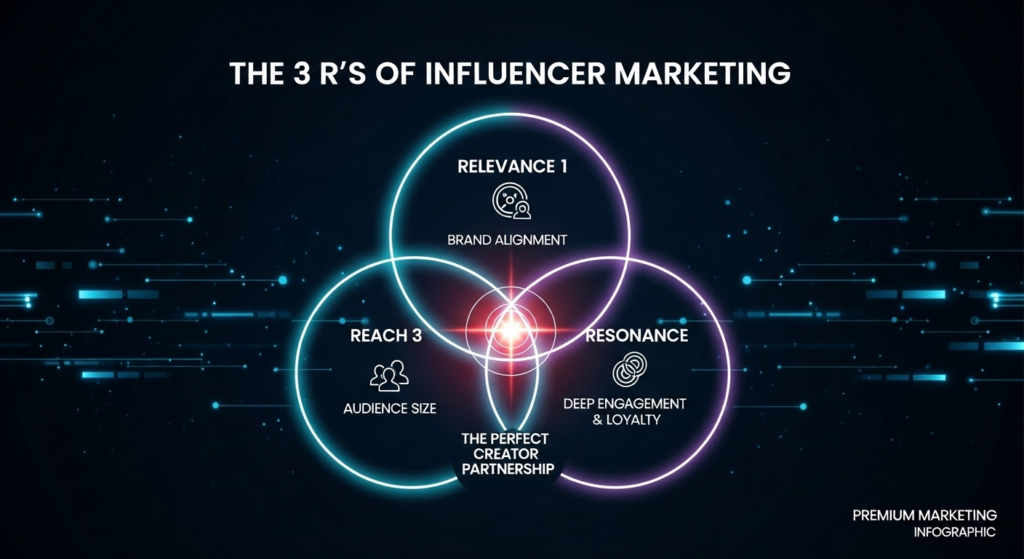
What are the 3 R’s of influencer marketing?
The three R’s are Relevance, Reach, and Resonance. Relevance determines if the creator aligns with your brand voice; Reach evaluates their potential audience size; and Resonance measures the depth of meaningful interactions they provoke within their community.
How do you negotiate content usage rights with an influencer?
Your contract must clearly state exactly how, where, and for how long you can use their assets. You must distinguish between organic posting (relying on their natural feed) and whitelisting/dark posting (where you gain explicit permission to run targeted paid ads directly through the creator’s personal account, maximizing precise ad targeting).
What is the best way to track influencer ROI?
To accurately measure Return on Investment, you must track multi-touch attribution. Do not rely exclusively on likes; implement UTM parameters, custom promo codes, and pixel tracking to follow a user’s journey from their initial click on the influencer’s post all the way down to a verified website purchase or app download.