

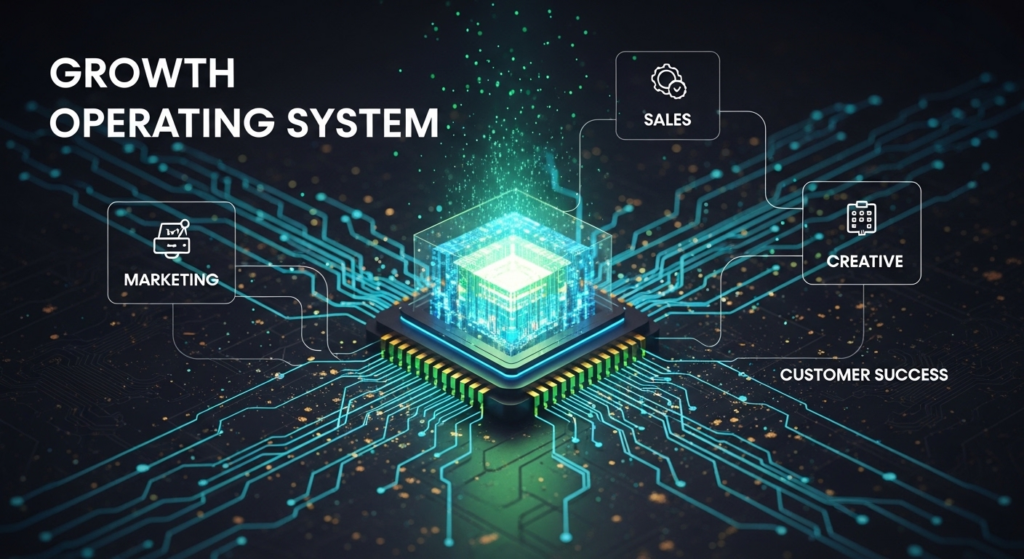
Scaling a modern business requires far more than generating top-of-funnel brand awareness. Customer acquisition is the comprehensive, measurable process a company uses to attract, engage, and convert potential leads into paying customers. While basic marketing focuses on visibility, a true acquisition strategy is a revenue-focused engine designed to build a predictable and sustainable pipeline for long-term growth.
To achieve this, ambitious brands must align their creative, marketing, sales, and customer success teams to create a frictionless journey for the buyer. For companies looking to eliminate wasted ad spend and dive straight into building a customised architecture, read our comprehensive guide on how to build a customer acquisition strategy.
The Core Components of the Customer Acquisition Funnel
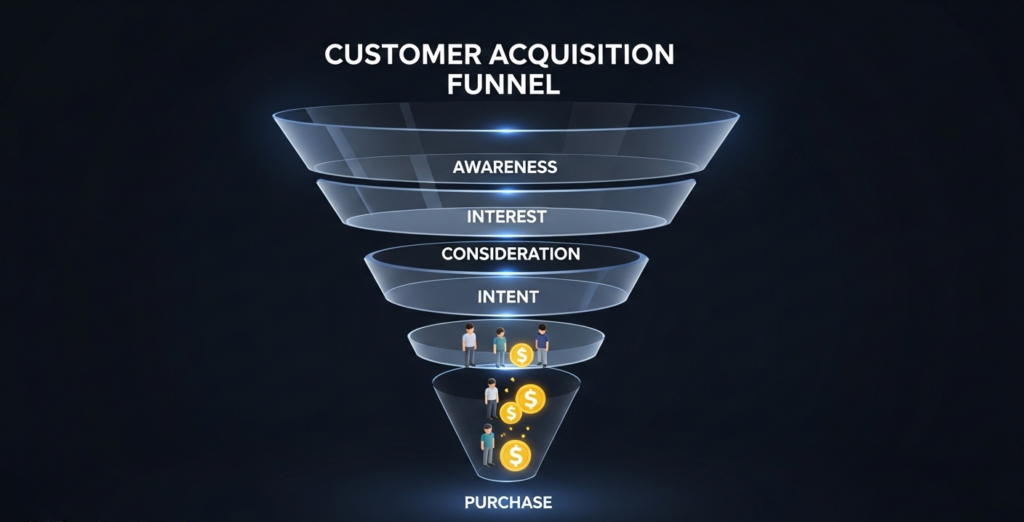
The customer acquisition funnel maps the precise journey a prospect takes from their initial interaction with your brand to their final purchase decision. Understanding these specific stages ensures your marketing system delivers the right message at the exact right time:
- Awareness: At the top of the funnel, consumers realize they have a problem and discover your brand through organic search, social media, or word of mouth.
- Interest: Potential customers seek out more information by visiting your website, researching your brand, or engaging with your digital content.
- Consideration: Prospects become qualified leads by actively evaluating your solution against competitors. They demonstrate this by subscribing to a mailing list, reading reviews, or signing up for a free trial.
- Intent: The lead shows strong buying signals, such as adding a product to an online cart, filling out a contact form, or engaging in a targeted sales demo.
- Purchase: This is the ultimate conversion stage where the prospect officially completes the transaction and becomes a paying customer.
Advanced Customer Acquisition Strategies for 2026
Successfully guiding consumers through this funnel requires a mix of digital and offline tactics. Businesses must deploy an omnichannel approach to ensure a seamless experience across all touchpoints. Here are the highest converting strategies utilized by leading agencies:
1. Leverage AI and Hyperpersonalization
Consumers demand dynamic, frictionless, and highly personalized journeys. By deploying artificial intelligence and automation alongside robust customer relationship management (CRM) tools, you can deliver hyper-personalized messaging tailored to an individual buyer’s exact behavior and past interactions. Proactive tools like intelligent chatbots can immediately welcome website visitors and seamlessly connect them to support or sales teams to capture leads instantly.
2. Deploy Experiential B2B Marketing
Customer acquisition is not solely digital. When attempting to acquire high-value B2B corporate accounts, standard digital ads are frequently ignored. Instead, businesses should utilize Experiential Giveaways. Brands can bypass digital gatekeepers and secure major corporate accounts through genuine relationship marketing by sending hyper-personalized physical packages, customized books, and handwritten notes directly to decision makers.
3. Optimize the Digital and Mobile Experience
A company website acts as the primary digital storefront. If the user experience (UX) is clunky or the mobile checkout process is difficult, potential customers will abandon their carts. A responsive, customer-centric digital experience naturally invites users in, caters to both rapid buyers and diligent researchers, and seamlessly connects prospects to sales representatives when they are ready to convert.
4. Maximize Influencer Marketing
Partnering with vetted creators is a powerful method to reach highly engaged communities. By launching Influencer Marketing Campaigns, companies leverage the established trust of niche thought leaders. This strategy drives high-intent traffic directly into the conversion funnel, combining creators, targeted content, and conversion-focused media for measurable revenue lift.
5. Align Sales, Marketing, and Customer Support
A major friction point in customer acquisition occurs when marketing delivers unqualified leads to the sales team. Sales and marketing departments must work collaboratively to improve lead quality, utilizing shared CRM data to understand exactly what the customer wants.
Furthermore, investing in the overall customer experience is paramount. Research reveals that 62 percent of B2B customers and 42 percent of B2C customers purchase more following a positive customer service interaction.
Where to plug this new section in: I recommend inserting this new section immediately after the “5. Align Sales, Marketing, and Customer Support” subsection and right before the “Essential Customer Acquisition Channels” section. This placement perfectly bridges the gap between your strategy and the channels you use, proving with hard data exactly why the customer experience is so critical to closing sales.
Here is the new, detailed content you can copy and paste into the article:
The Statistical Impact of Customer Experience on Acquisition
While your marketing channels dictate how you reach your target audience, your actual conversion rate relies heavily on reducing buyer friction and providing excellent customer service. Consumers demand seamless, dynamic, and contextual customer journeys.
To understand exactly how friction and service impact your revenue, consider the following data points regarding customer behavior during the acquisition process:
Table 1: The Cost of Buyer Friction
| Customer Behavior & Friction Metric | Statistical Reality |
| Time Spent Searching | 82 percent of customers spend less than 10 minutes looking for an item they need. |
| Impact of High Friction | 96 percent of customers experiencing a high-friction journey are likely not to sign up for a brand’s offerings. |
Because buyers make rapid decisions, a complicated checkout process or a confusing website interface will almost always result in an abandoned cart and a lost acquisition opportunity.
Furthermore, the quality of your customer service directly dictates whether a potential lead completes their initial purchase and whether they return to buy again.
Table 2: Customer Service Impact on Conversion and Churn
| Market Segment | Impact of Good Customer Service | Impact of Bad Customer Service |
| B2B Customers | 89 percent purchased more after a positive customer service experience. | 66 percent stopped buying completely after a bad customer service interaction. |
| B2C Customers | 42 percent purchased more after a positive customer service experience. | 52 percent stopped buying completely after a bad customer service interaction. |
These statistics prove that customer support is on the front lines of your acquisition strategy. Even a massive increase in top-of-funnel brand awareness will fail to generate revenue if the potential customer encounters poor service before checking out.
Essential Customer Acquisition Channels
Marketing channels serve as the building blocks of any successful strategy. Different platforms are most effective at different stages of the buyer journey:
- Content Marketing and SEO: Search Engine Optimization ensures your brand appears first when a potential customer searches for a solution. By publishing helpful blogs, whitepapers, and localized landing pages, you capture high-intent leads during the awareness and consideration phases without constantly paying for ad clicks.
- Social Media: Channels like LinkedIn, Instagram, and TikTok allow brands to express their values, partner with influencers, and build community trust.
- Paid Advertising: Pay-per-click (PPC) ads, display ads, and video campaigns keep your brand top of mind. These targeted advertisements allow businesses to promote specific offers to highly segmented audiences.
- Email Marketing: Email remains one of the most powerful tools for nurturing leads. Automated, personalized email campaigns guide potential customers through the consideration and intent stages, highlighting special discounts or valuable resources to encourage final conversion.
Key Metrics to Measure Customer Acquisition Success
A successful campaign is never measured by vanity metrics. Businesses must track strict financial data to ensure their acquisition architecture remains profitable and scalable.
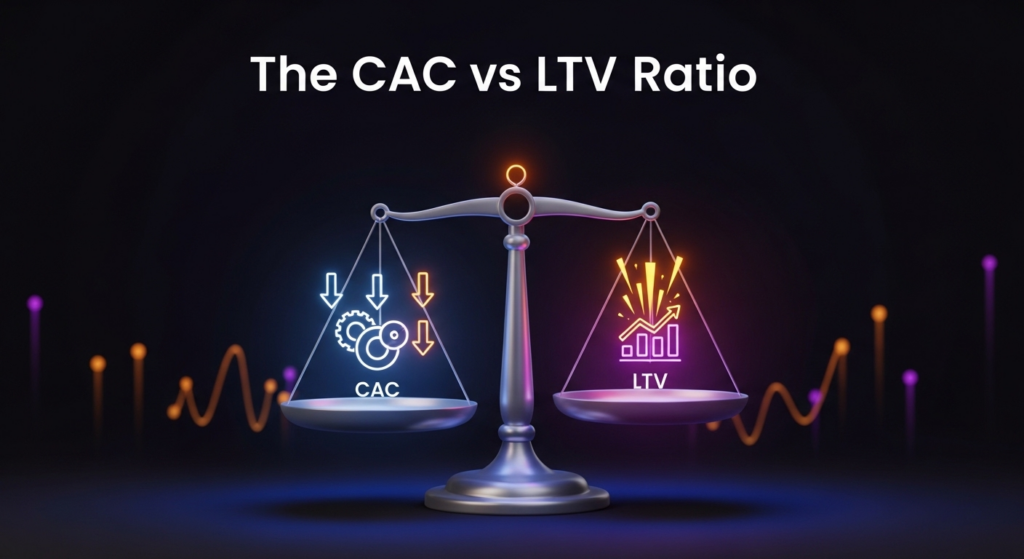
- Customer Acquisition Cost (CAC): This metric calculates the total cost of acquiring a single new customer. It is determined by dividing your total marketing and sales spend by the number of new customers acquired during that specific period. Minimizing your CAC involves testing ad creatives and eliminating wasted ad spend on underperforming channels.
- Customer Lifetime Value (LTV / CLV): This represents the total estimated revenue a business can expect from a single customer throughout their entire relationship with the brand. The ultimate goal is to ensure your LTV is significantly higher than your CAC.
- Conversion Rate: This percentage tracks how many prospects take a desired action, such as making a purchase or filling out a form. High conversion rates indicate a highly efficient sales funnel.
- Churn Rate: The percentage of customers who stop doing business with your company. A high churn rate indicates poor post-purchase satisfaction, which severely damages the ROI of your initial acquisition investments.
Real-World Proof: PMG Customer Acquisition Case Studies
As a dedicated Growth Operating System, PMG focuses on building performance marketing funnels that drive verified revenue.
- Tracking Exact CAC for Web3: When scaling the MYST app for MyStandard.io, PMG built a tracking ecosystem that attributed millions of top-of-funnel impressions directly down to verified app downloads. This proven user acquisition model established clear CAC data for founders and investors.
- Local SEO Foot Traffic: For The Dog House Pet Salon, PMG completely overhauled their local SEO visibility. By aligning their search presence and social media, the campaign brought in over 100 new, paying local clients a month to their physical locations.
- Geofencing for Physical Sales: For Shoreline Harley Davidson, PMG deployed targeted paid ad strategies and hyper-local geofencing to drive actual physical foot traffic to the dealership. This strategy successfully turned digital interest into packed showroom events and measurable sales.
Customer Acquisition FAQs
What is the difference between customer acquisition and sales?
Customer acquisition is much broader than sales. It encompasses all activities designed to attract and convert prospects, including marketing, lead generation, creative advertising, and lead nurturing. Sales is one specific part of the broader acquisition process focused strictly on closing deals at the bottom of the funnel.
How do you minimize customer acquisition cost?
To lower your Customer Acquisition Cost (CAC), you must identify and eliminate wasted ad spend. This requires rigorous tracking of campaign performance, A/B testing ad creatives and messaging, and allocating your budget strictly to the highest-performing channels. Investing in SEO to generate organic traffic and utilizing automated lead nurturing also improves overall conversion rates, driving down your cost per acquisition.
Why is customer retention critical to the acquisition process?
While acquiring new customers grows your initial market share, it is historically much more expensive to acquire a new buyer than to retain an existing one. A strong focus on customer retention maximizes the Customer Lifetime Value (CLV) of each user, which offsets the initial acquisition costs and significantly improves the long-term profitability of your business.